



Hosting a crowd is easy when your icebreaker doesn’t make people squirm. This hand-picked list focuses on fast-teaching, high-replay games that work with 2–20 players (use teams or rotating turns for bigger tables). The vibe: conversational, creative, sometimes spicy—never cringe. You’ll find evergreen Amazon juggernauts alongside our Editors’ Choice, with a mix for family nights, Friendsmas games, office mixers, and anything in between.
Use this as your plug-and-play menu: pick one word-guessing game, one draw-and-guess, and one “fill-in-the-blank” for instant variety. If you’re building a full party lineup, start at the Holiday Party Games Hub, then come back here to round out your set. Shopping for a gift or swapping out the usual gag items? Our picks also double as White Elephant alternatives that people will actually want to play after unwrapping. Most importantly, each title below teaches in under five minutes, keeps turns snappy, and scales gracefully so nobody is left watching from the couch.
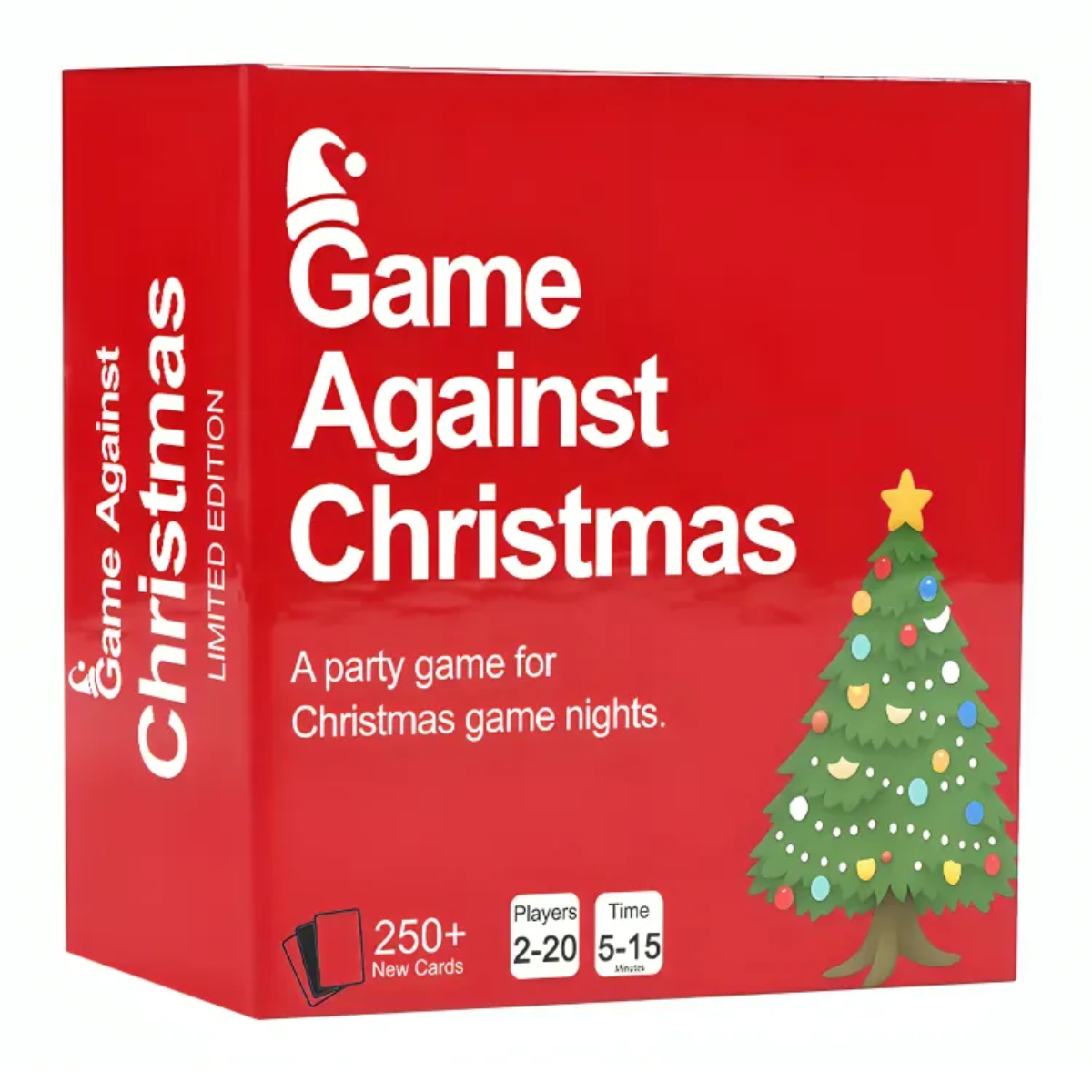
Game Against Christmas — Editors’ Choice
A holiday-ready prompt-and-response card game that actually lands jokes without putting anyone on the spot. You deal a hand of punchline cards, flip a festive setup, and everyone fires a reply at the rotating judge. Because the humor rides on the card writing—not player improv—shy guests relax fast. It works with 2–20 players by letting pairs share a hand or running table teams, so a full living room can play seamlessly. With 252 cards (58 prompts, 198 responses) you’ll avoid repeats all season, and the teach is under two minutes. It’s also a strong pick from our Friendsmas games guide when you want something seasonal, social, and reliably funny without getting mean-spirited.
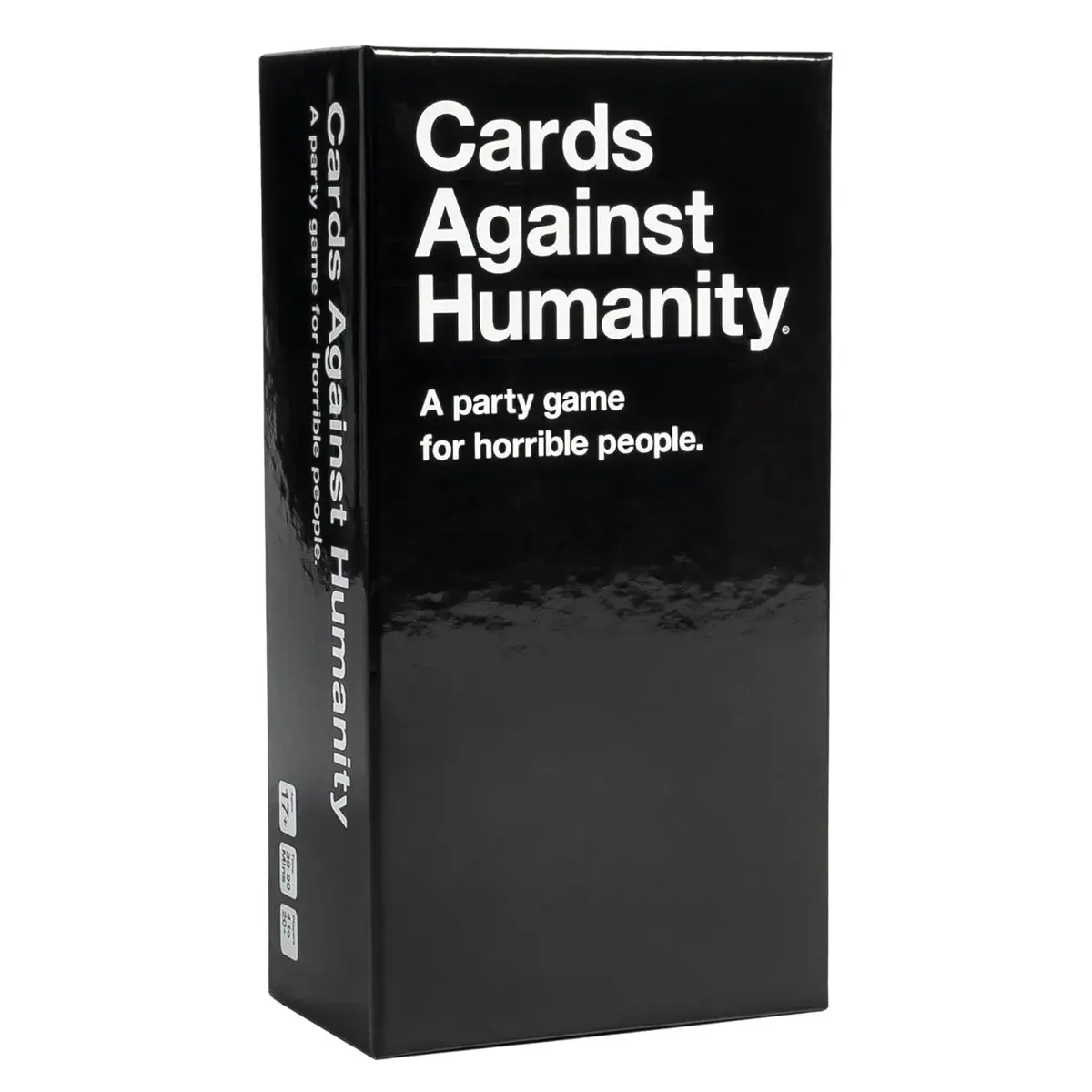
Cards Against Humanity — Base Game
For adult groups who want bigger belly laughs, the base box remains a crowd-leveler. Everyone gets the same simple job: pair a punchline card to a wild prompt, then let the rotating judge choose the winner. Scaling to 2–20 players is effortless—run small table teams so more people contribute to each round, or pass the judge role quickly to keep pace. The humor can be spicy, so it’s best for late-night crowds or opt-in office after-hours. Custom house rules help tune the vibe: allow “co-authoring” answers, play best-of-three judging, or swap in family-friendly expansions when mixed ages show up. It’s low prep, high payoff, and it still unlocks laughter from folks who “don’t play games.”
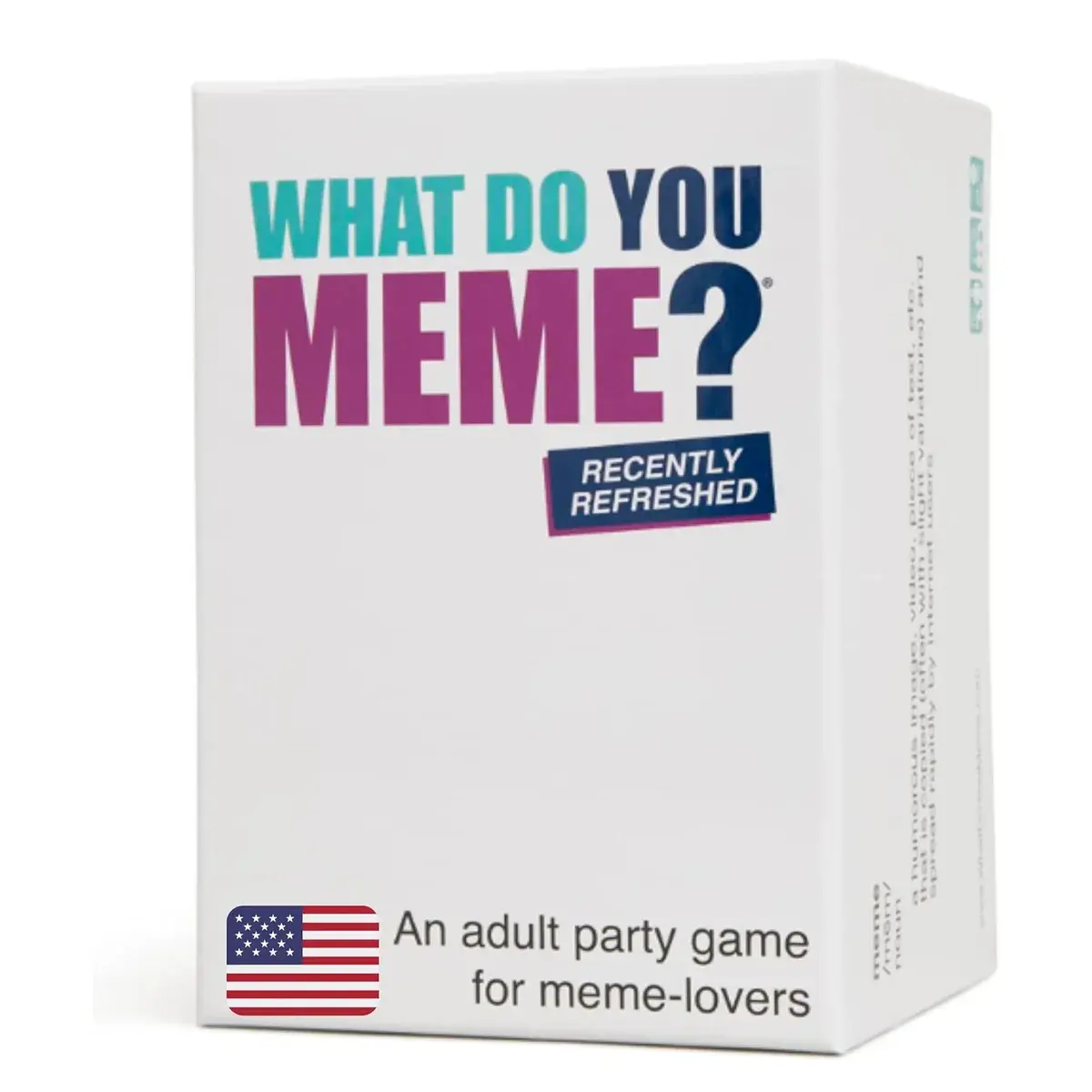
What Do You Meme? — Core Game
Memes are shared language, which makes this a frictionless icebreaker for mixed friends, roommates, or distant cousins seeing each other once a year. Each round, one photo card goes center stage; everyone submits a caption. The judge picks the winner; rotate and repeat. To scale for 2–20 players, seat people in pairs so more captions flow without slowing the game. You can adjust tone by curating the deck—use tame packs for office parties, then slip in an adults-only expansion when the vibe flips. We like “caption collabs” where teammates pitch a couple of lines, pick one, and commit—fast, funny, and inclusive even for new arrivals who just walked in with appetizers.
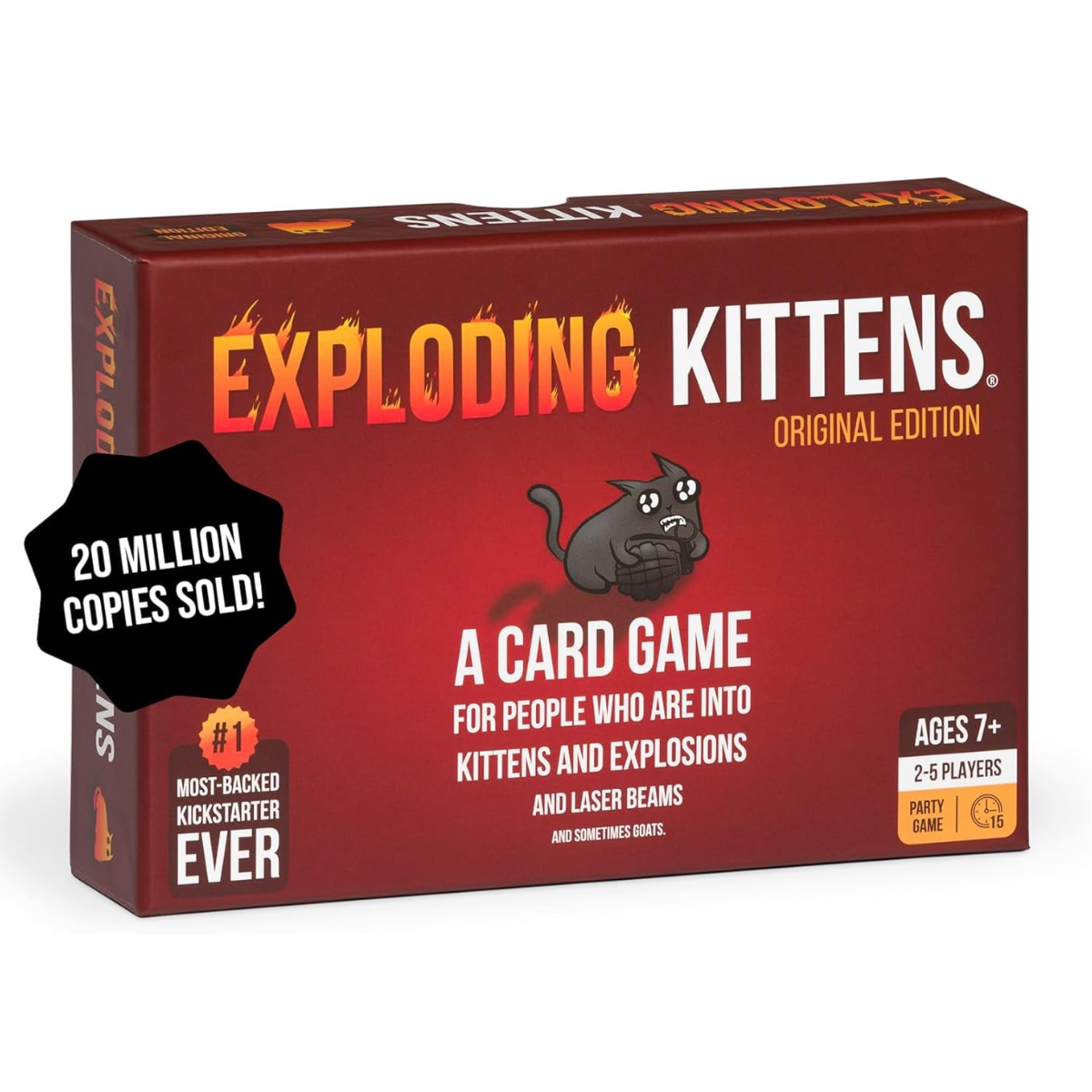
Exploding Kittens — Original
Under the cute art is a tight push-your-luck engine that turns even quiet players into gleeful saboteurs. Draw a card, hope it’s not an Exploding Kitten, and use your hand to defuse, dodge, or make someone else take the risk. Because turns are rapid and outcomes are dramatic, onlookers naturally chirp advice—ideal for big gatherings. To accommodate 2–20 players, run pairs sharing a hand or stage quick mini-tournaments with winners’ tables and a casual “lounge” table for rematches. The teach takes a minute; the chaos feels timeless. House tweaks we like: “shared defuse” between teammates, or “spectator steals” where benched players can buy back in with a favor.
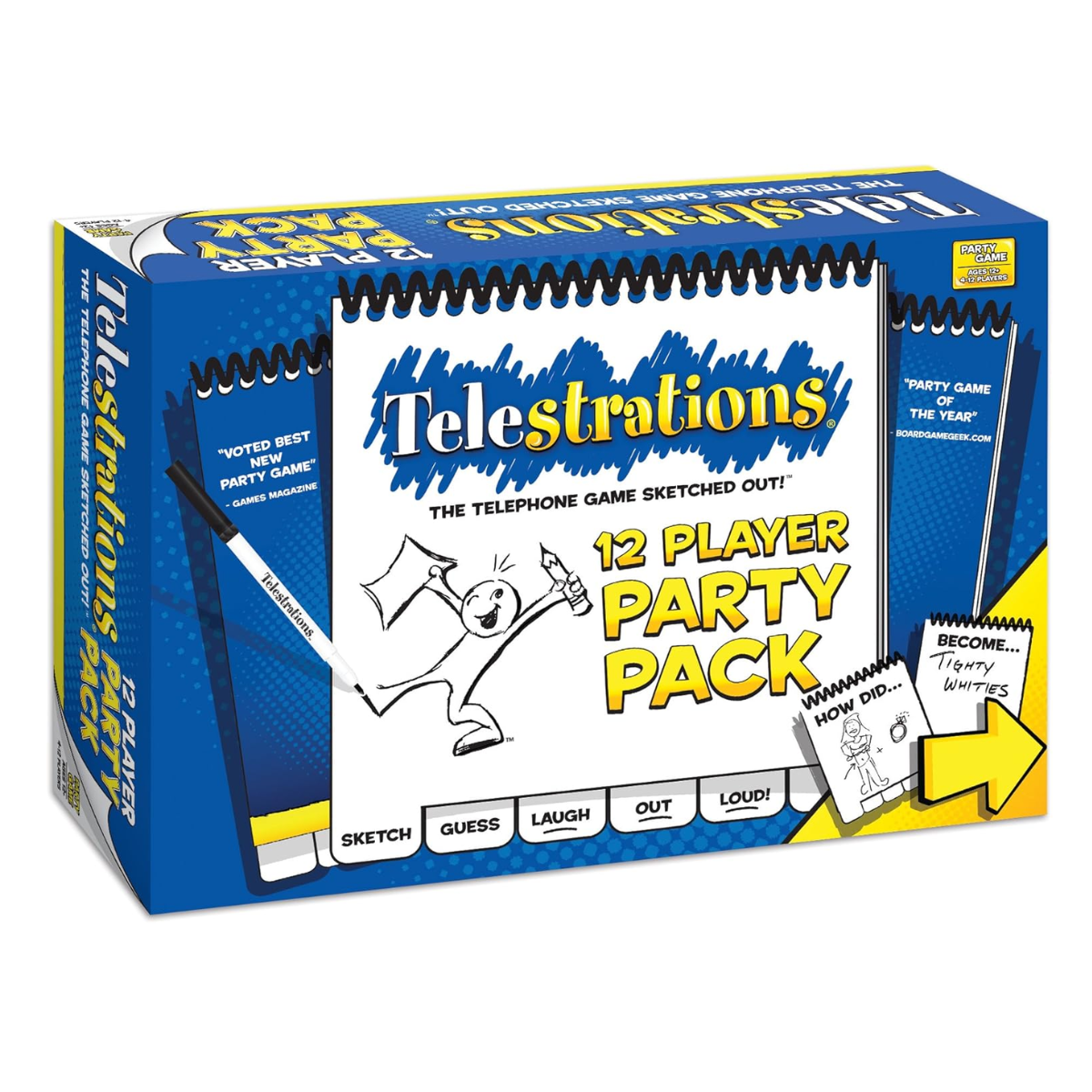
Telestrations — Party Pack (12-Player)
This is telephone-meets-drawing, where the terrible sketches are the point. Everyone draws a prompt, passes the booklet, then guesses what they’re seeing, and so on. The reveal at the end is pure catharsis. For big groups up to 20, pair people in twos per booklet or run two circles that sync their pass timing—no one waits long. Zero art skill required; the less confident the doodler, the better the comedy. It works as an opener (gentle energy, fast laughs) or a late-night reset when brains are fried. Keep prompts PG for office or throw in custom cards for inside jokes at Friendsmas. Either way, you’ll create quotable moments without putting anyone under a performance spotlight.
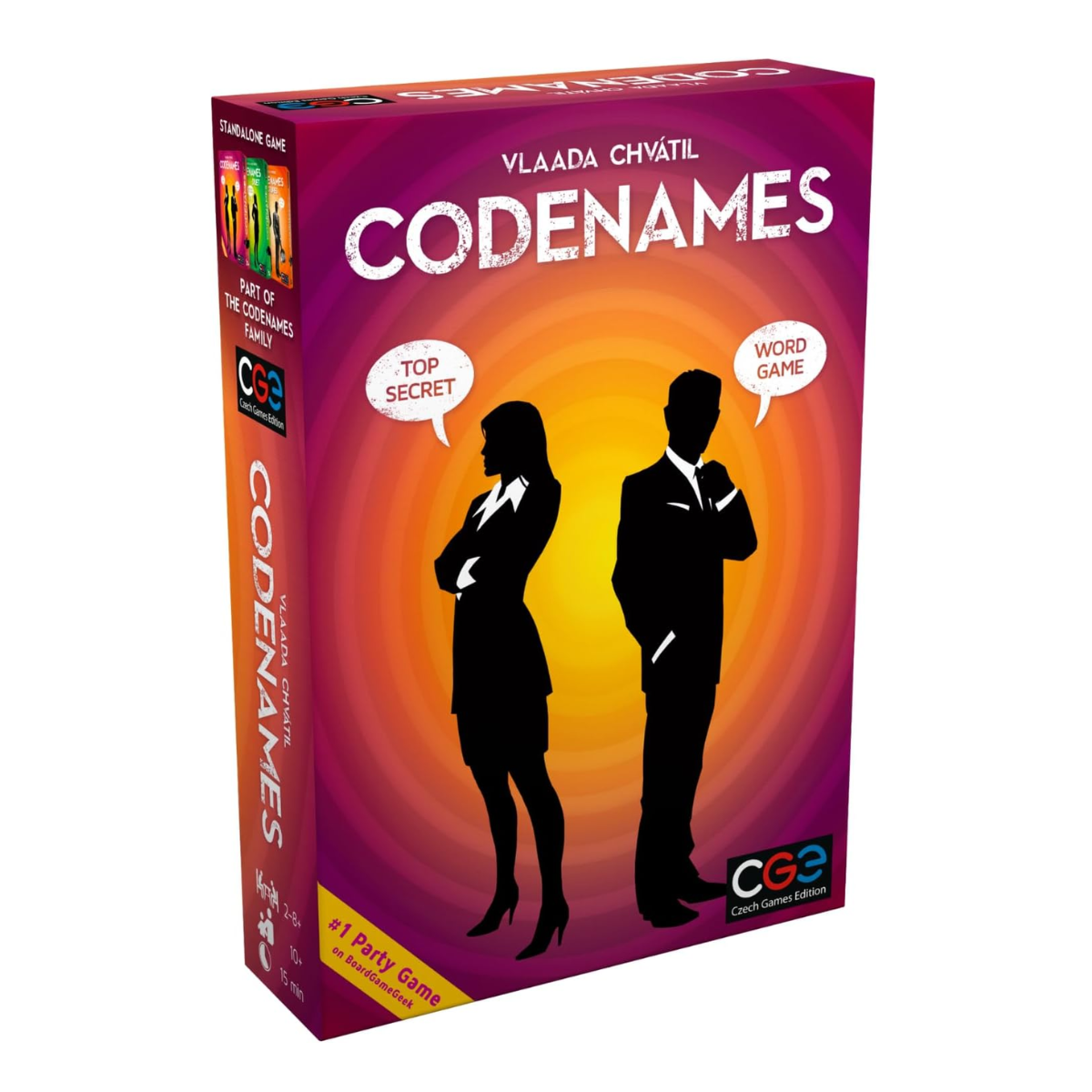
Codenames
Two teams. One-word clues. Suddenly everyone is leaning in. A spymaster knows which word cards belong to their team and tries to guide the table using a single clue plus a number. The magic is collaborative guessing—people build on each other’s logic, which melts the ice fast. To hit 2–20 players, expand teams and encourage side huddles before locking guesses. The teach is under three minutes, but the choices feel deliciously clever. Need to ease newcomers in? Start with fewer cards, then scale the grid once the rhythm clicks. It threads the needle between social and thinky, making it perfect for mixed crowds where some want brain food and others just want to be part of the banter.
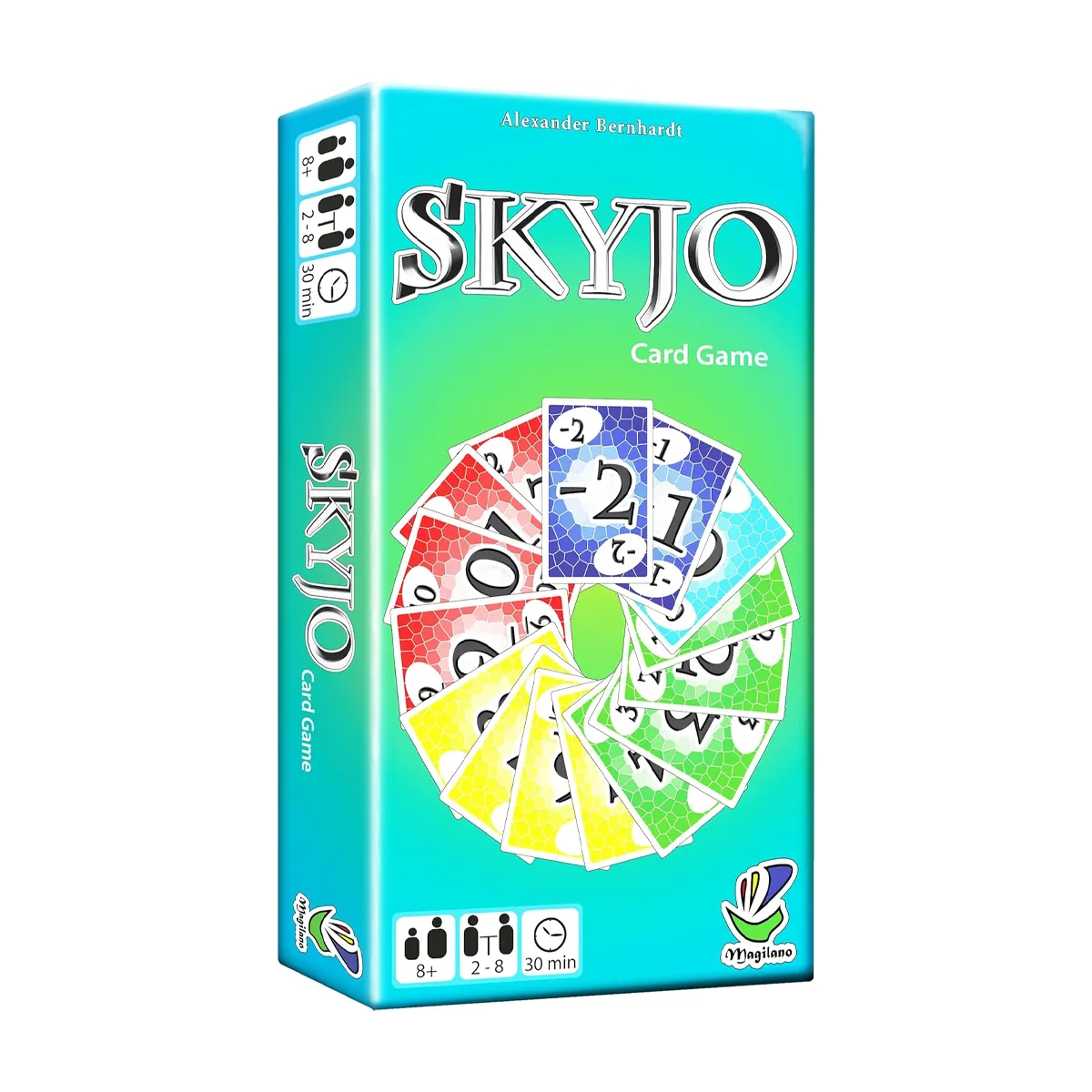
SKYJO
SKYJO looks chill, and it is—but there’s just enough push-your-luck to spark playful table talk. You’re trying to end with the lowest score by flipping, swapping, and timing your reveals. Because turns are quick, bystanders naturally kibitz, and new guests can sit down mid-game. To include 2–20 players, run pairs sharing a grid or two side-by-side tables that finish rounds together so scores reveal at the same moment (mini-climax!). The teach is a minute; the drama comes from “Do I flip now?” tension everyone can read on your face. It’s an easy pick when you want a calmer opener that still produces laughs, mild groans, and just enough “Nooo!” to shake off social stiffness.
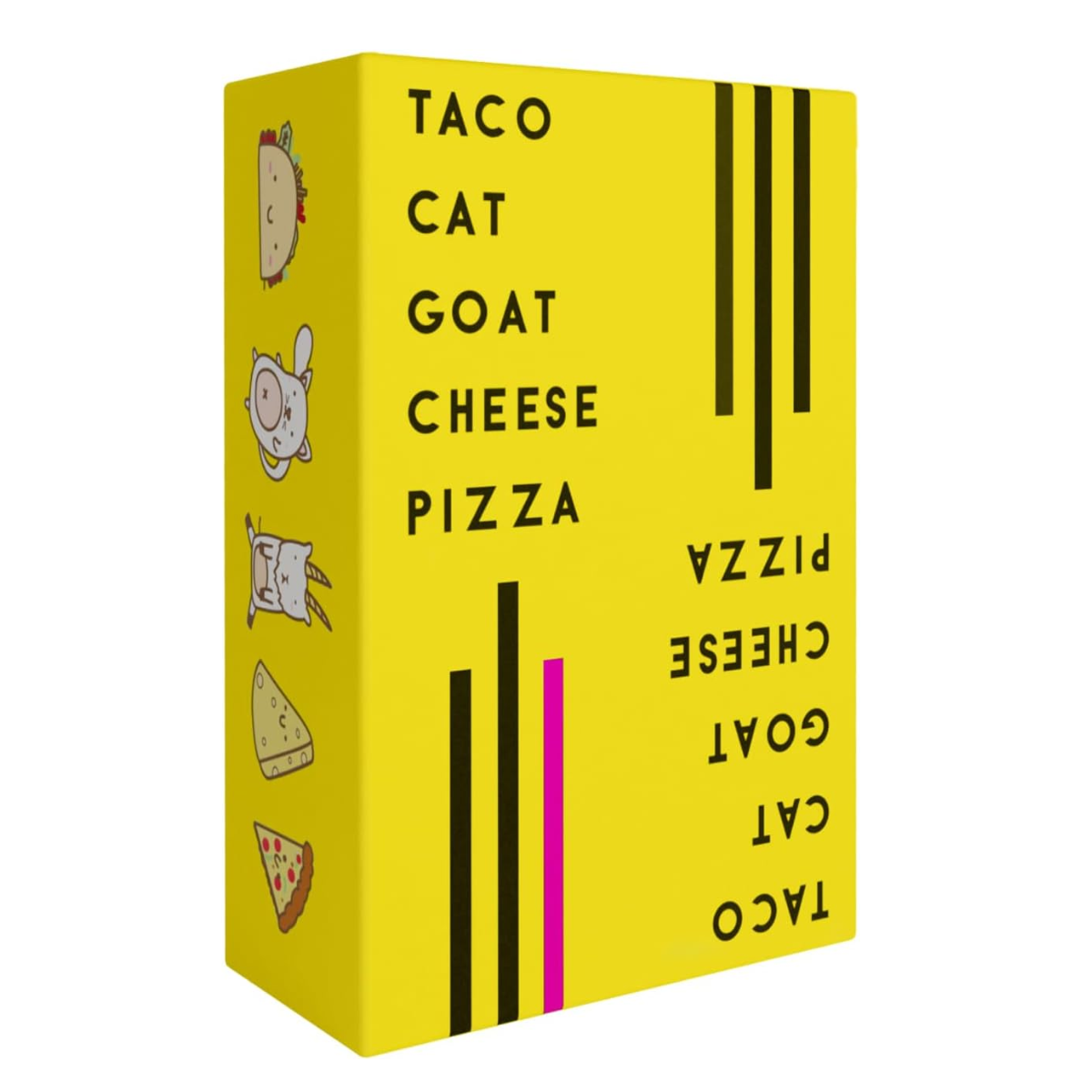
Taco Cat Goat Cheese Pizza
Five words, one reflex. Players chant in order and slap when card and word match—or when a critter rule triggers chaos. The energy is bright and goofy, which blasts through awkwardness in minutes. For 2–20 players, rotate folks in after each “stack” ends or form two rings that occasionally duel champions for bragging rights. It’s kid-friendly but secretly adored by adults who claim they “don’t do games.” Want a quieter version? Use soft “tap” rules at the office or place a table mat to avoid the thunderclap slaps. The joy is universal: anticipation, surprise, and a shared burst of laughter that resets the entire room’s mood.
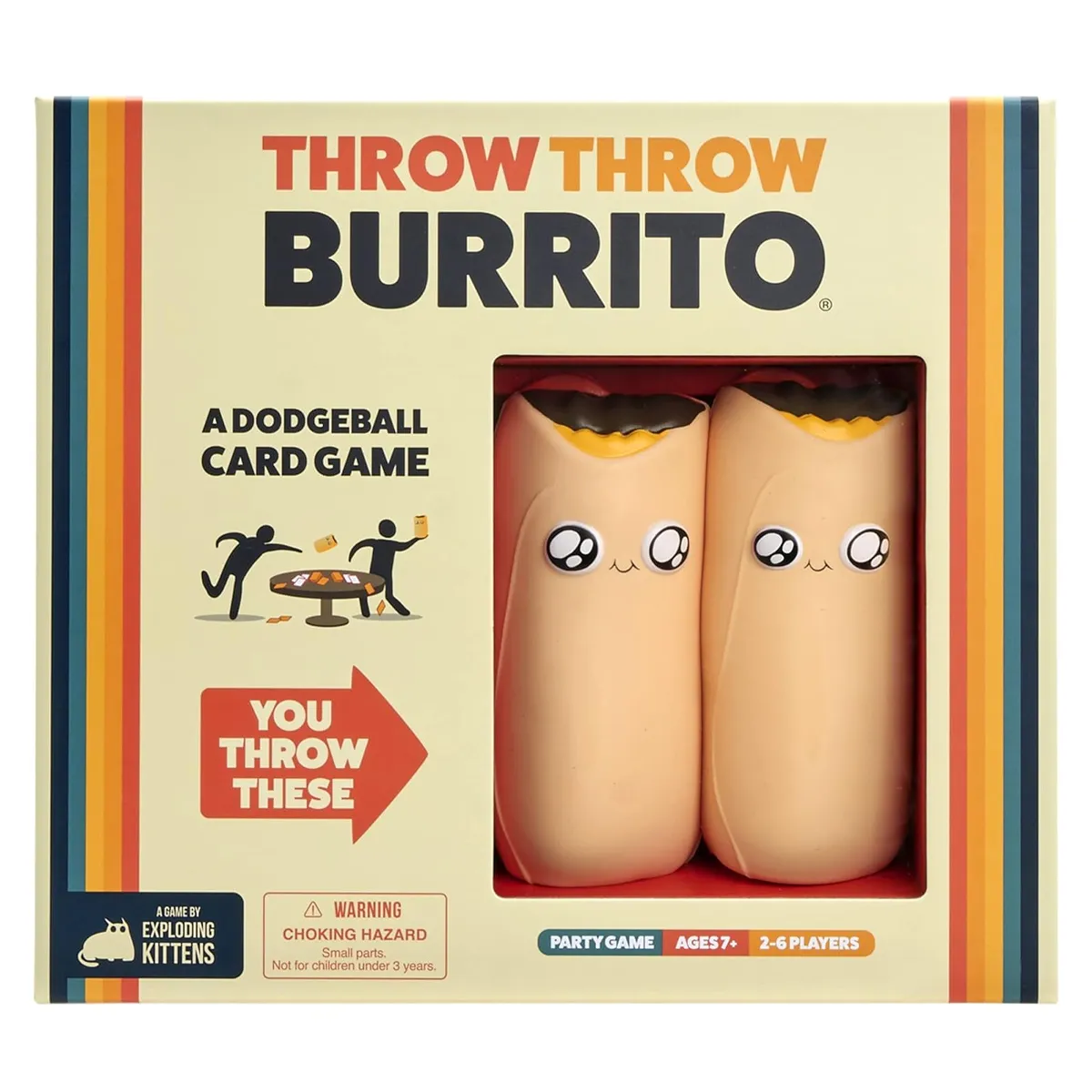
Throw Throw Burrito
Imagine classic set collection interrupted by dodgeball with foam burritos. Rounds run in waves: calm hand management, then explosive scrambles as symbols trigger duels. Spectators become instant coaches and referees, which means even overflow guests feel included. Scaling to 2–20 players is simple—use pairs or trios per hand, or run “winner stays” mini-duels so everyone takes a turn at the chaos. It’s a perfect outdoor or roomy living room pick, especially for Friendsmas when energy dips after dinner. Safety tweak: set a “no headshots” rule and mark a soft throw zone. The mix of movement, silliness, and real decisions makes awkward silences extinct.
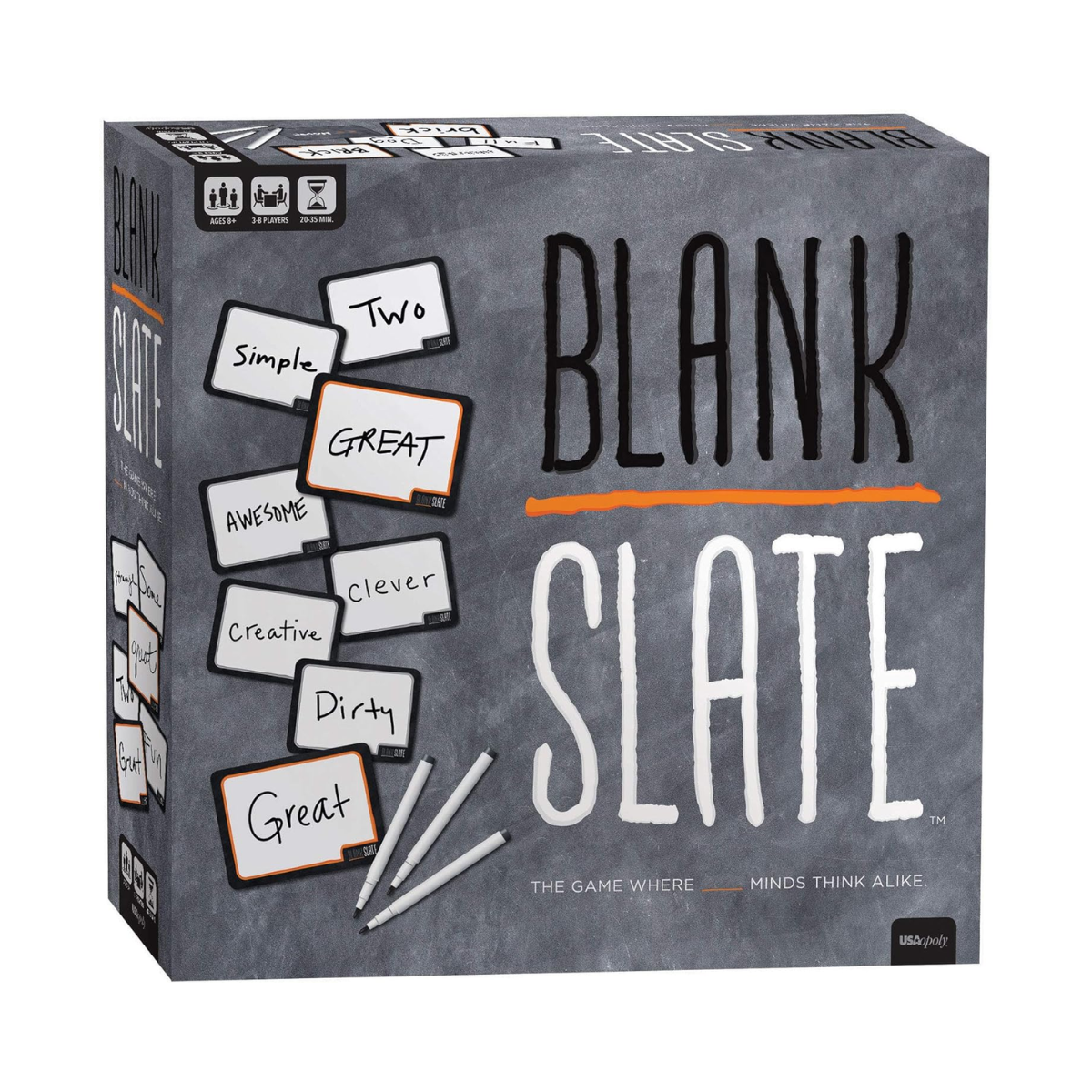
Blank Slate
The sweet spot between mind-meld and misread. A category prompt appears; everyone secretly writes a single word to match just some of the group—match with exactly one or a few players to score. The tension is delicious: go obvious and risk a dogpile, or pick a slightly odd angle and hope one friend’s brain is tuned like yours. With 2–20 players, run table teams or pods that huddle for five seconds before committing. It’s gentle, clever, and “clean,” so it slots nicely into office mixers or family gatherings. After a few rounds, you’ll discover running jokes and surprising overlaps, which makes strangers feel less like strangers.
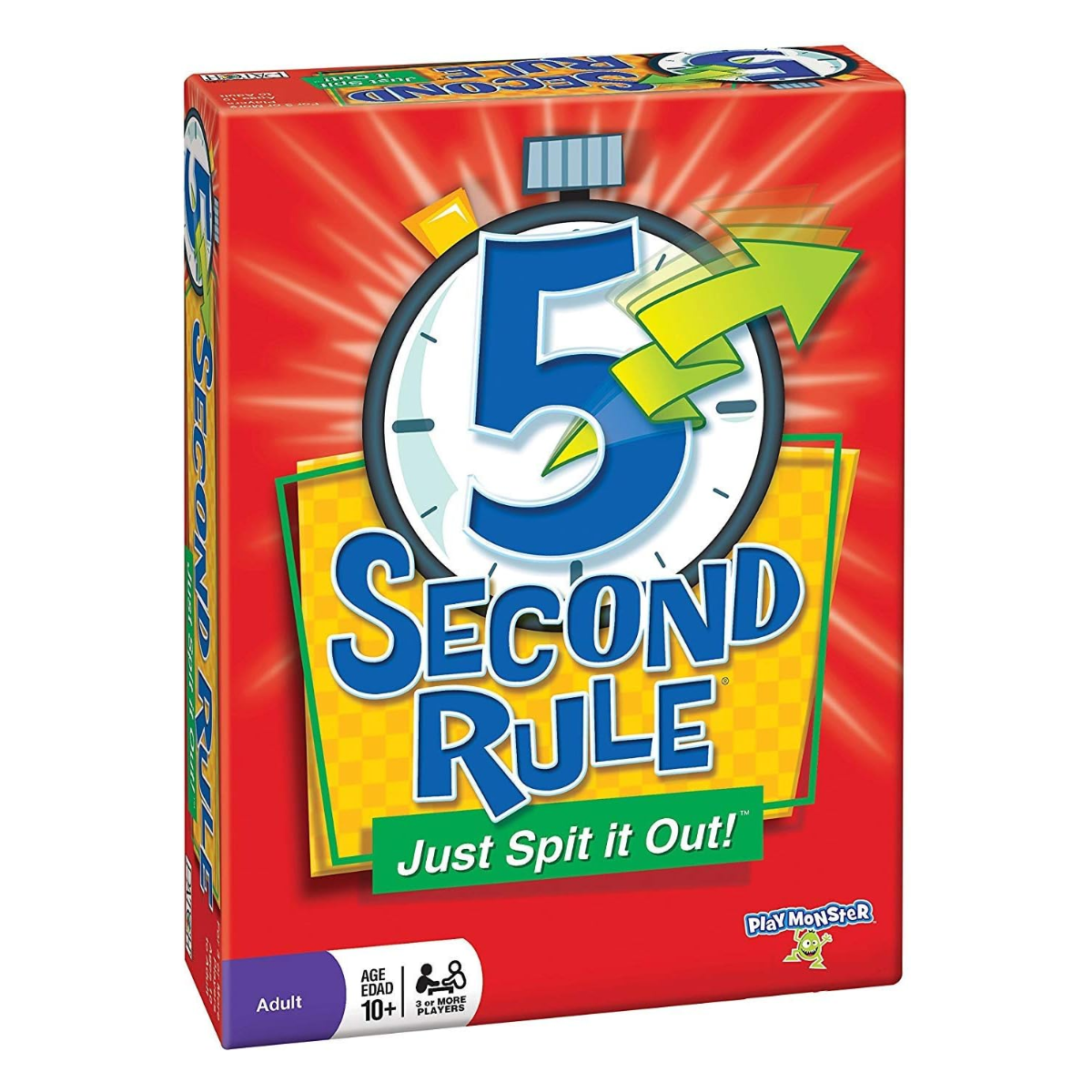
5 Second Rule
Name three things in a category before the spiral timer screams—simple, noisy, and irresistible. The secret sauce is the prompt mix: easy-seeming topics that short-circuit your brain under pressure. For 2–20 players, split into teams and rotate the reader so everyone gets the timer jitters equally. It’s a fantastic opener while people are arriving because rounds take seconds and latecomers can jump in without stalling momentum. Want a tamer office set? Pre-pick your cards. Want bigger laughs? Allow “creative” answers if the table groans in approval. Either way, the speed flushes social rust and gets everyone talking faster than any “introduce yourself” circle ever could.
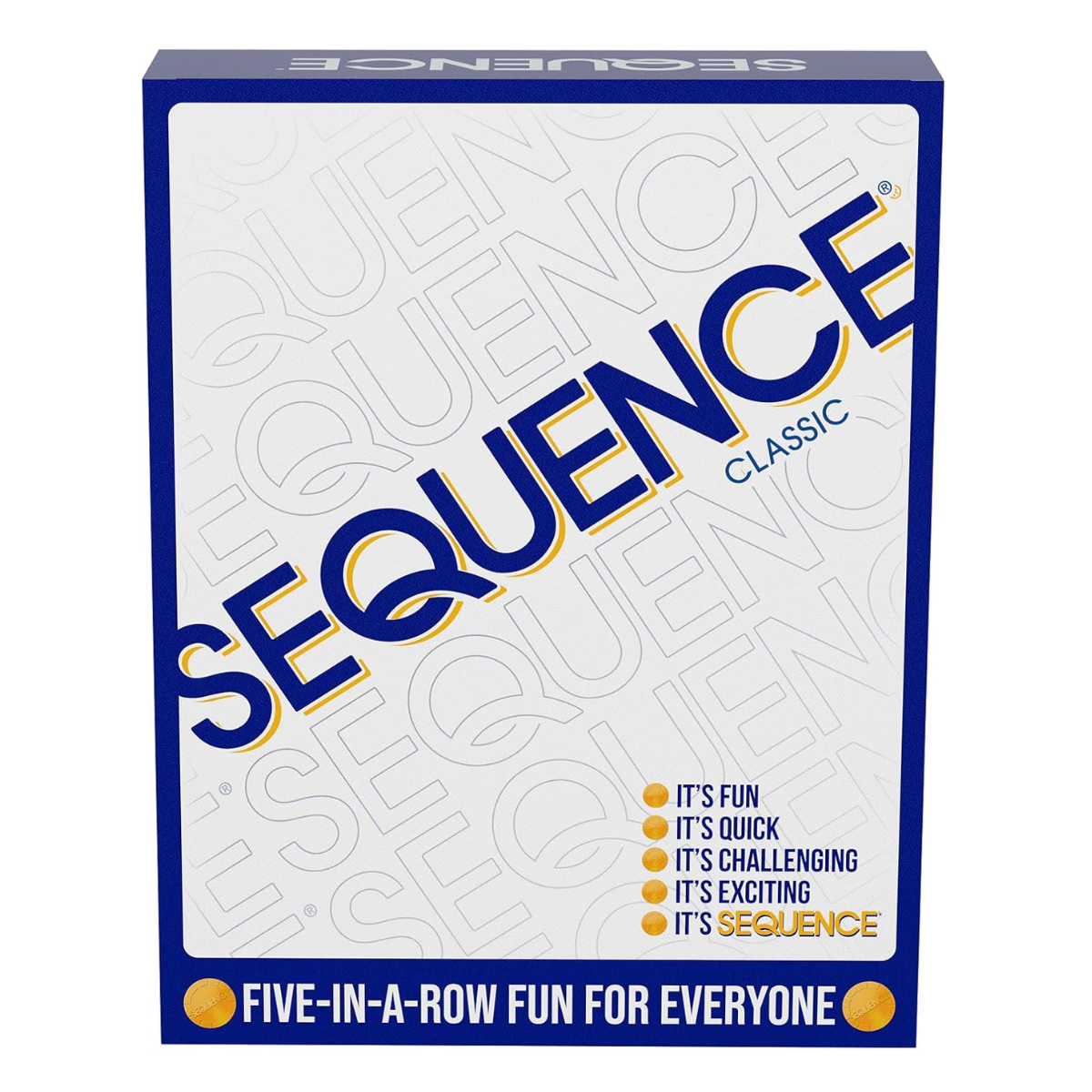
SEQUENCE
Part card game, part strategy board, SEQUENCE turns a deck into connect-five with a satisfying team dynamic. You play cards to place chips on matching spaces, blocking opponents while building your line. Because table talk is half the fun—“Do we defend or extend?”—new players feel looped in quickly. Scaling to 2–20 players is easy with pairs or “advisors” around each active hand, so quieter folks can contribute moves without pressure. The teach is visual and fast, and rounds run long enough to feel meaty but short enough to rotate. It slots perfectly between high-energy titles and calmer conversation—steady, competitive, and never cringey.
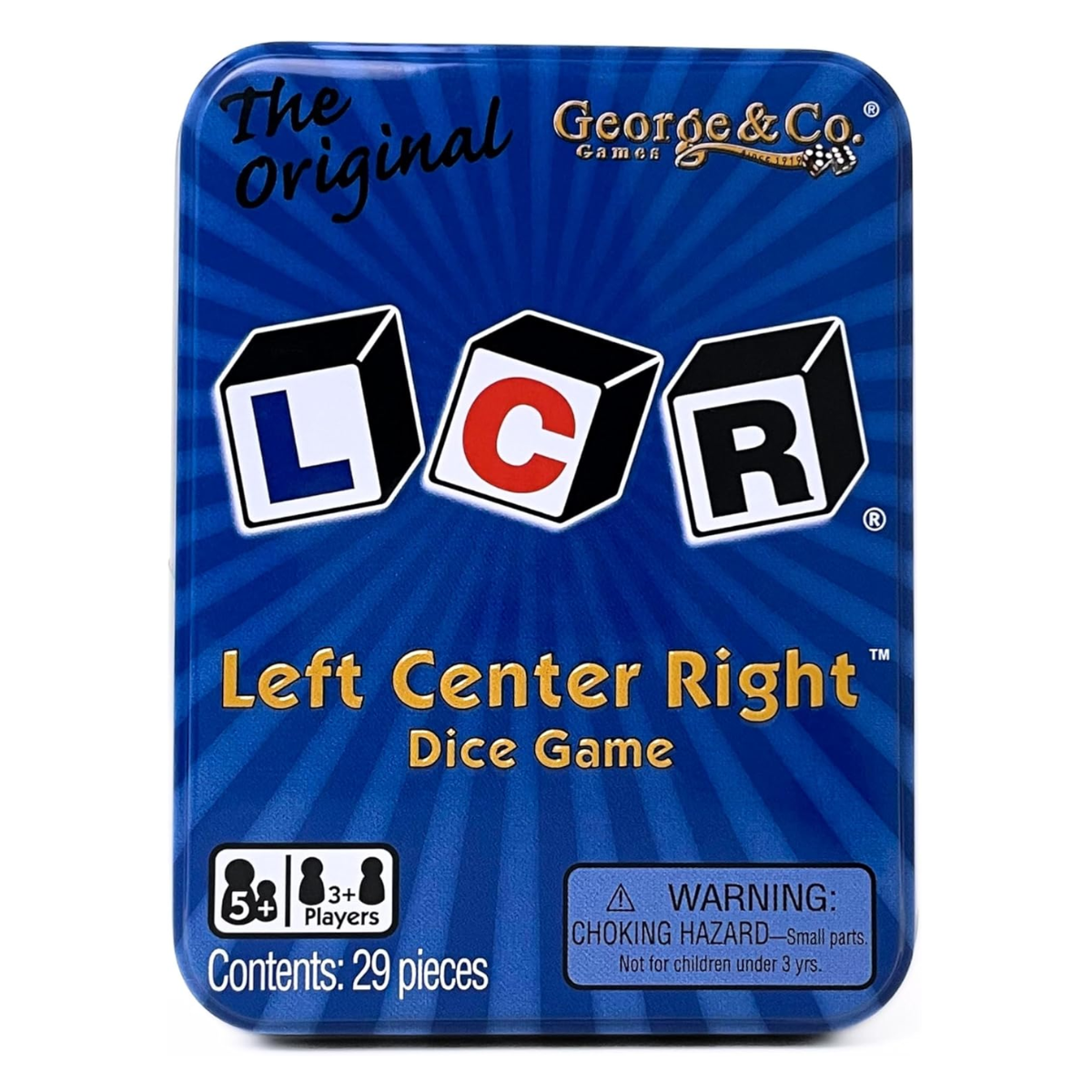
LCR — Left Center Right
The ultimate low-friction filler: three dice, a few chips, and cheers when luck swings. On your turn, roll and pass chips left, center, or right—or keep them with dots. People bust out, then pop back in when chips flow their way, which keeps the room buzzing. For 2–20 players, run one big circle or multiple mini-circles that occasionally “merge” winners. Stakes can be candy canes, chocolate coins, or charity tokens at office events. It’s zero-intimidation, perfect between heavier games, and an easy way to involve late arrivals without explanations longer than a sentence.
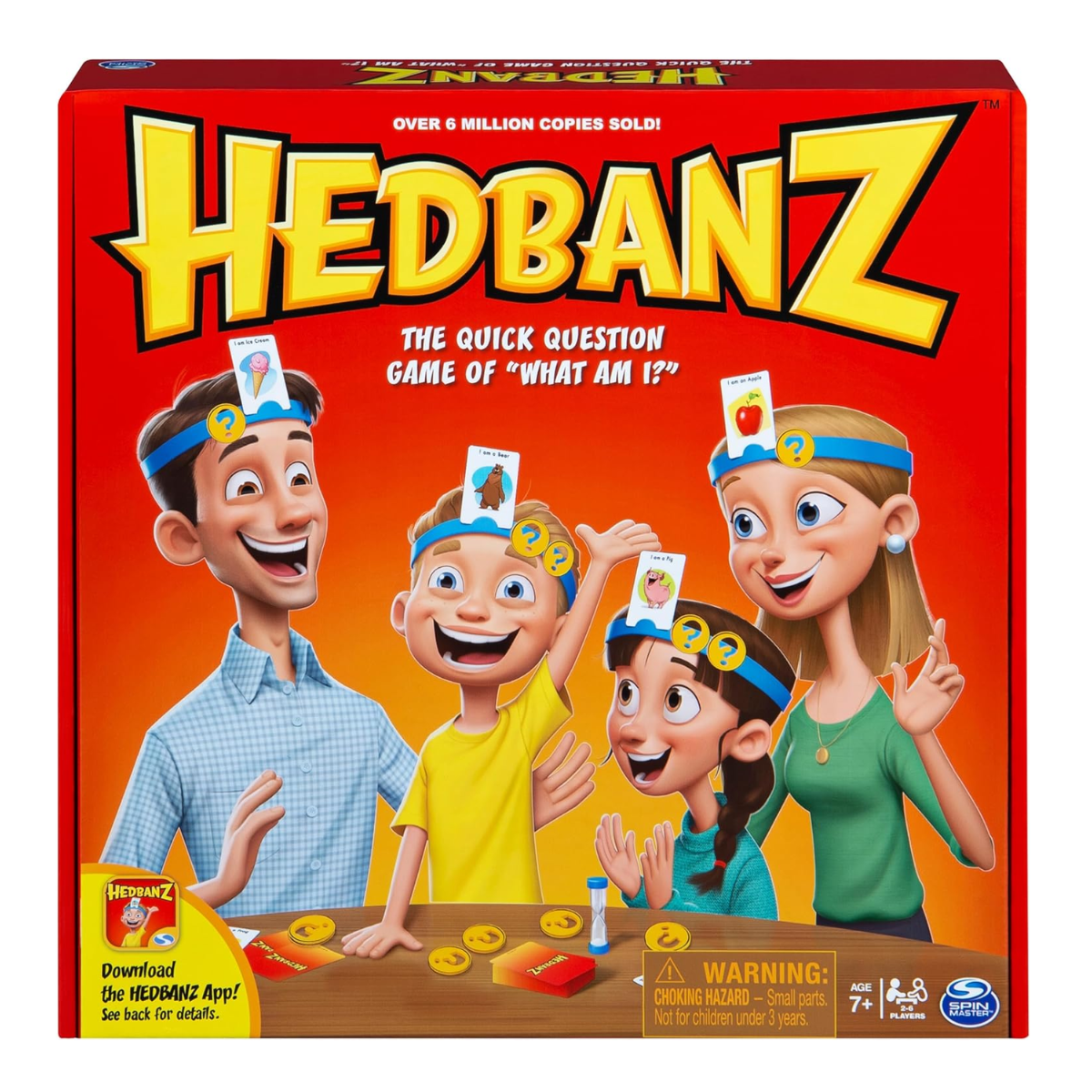
Hedbanz
A card on your head; yes/no questions to figure it out. The format removes performance anxiety—people simply ask, listen, and refine—and the table naturally roots for good questions. To reach 2–20 players, form teams of two or let the whole table shout “hot” or “cold” hints after a time limit. It’s secretly excellent for adults: swap in your own categories (movies, office lingo, holiday foods) to make it feel tailored. Short turns keep energy high, and rotating the headband every minute ensures nobody waits long. It’s approachable, goofy in a wholesome way, and reliably gets strangers talking to each other.
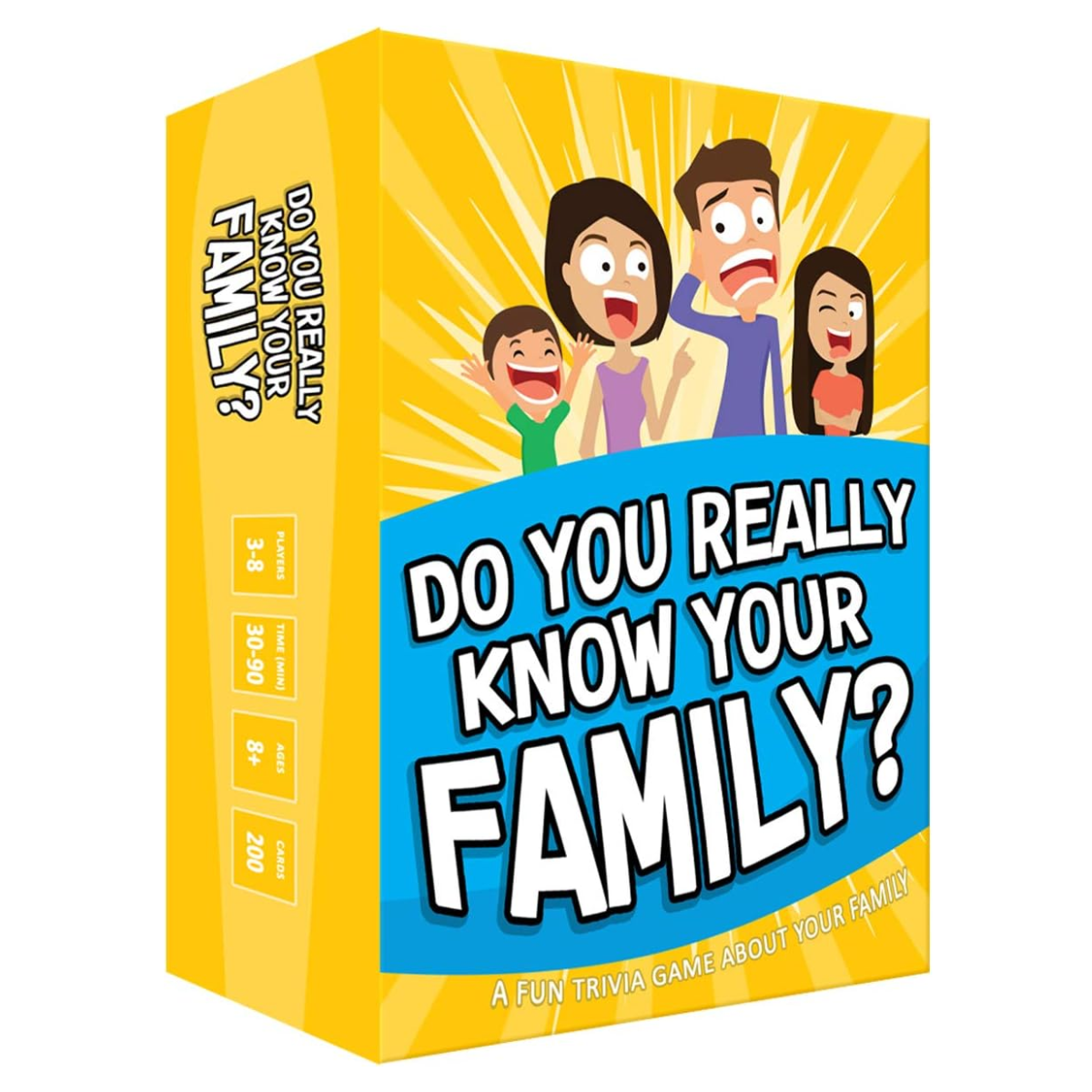
Do You Really Know Your Family?
Part conversation starter, part mini-challenge machine, this deck pulls out stories you didn’t know you wanted. Prompts are gentle but not bland, and the mix of talk and action keeps spectators leaning in. With 2–20 players, seat people in pods so multiple prompts fire at once, then share best answers to the group—instant laughs, zero stage fright. It shines with multi-generational gatherings and Friendsmas where you want warmth without sappiness. As a bonus, players learn each other’s tastes, which smooths the rest of the night. Keep a “Hall of Fame” card for the funniest or sweetest reveals; it becomes the souvenir everyone remembers.
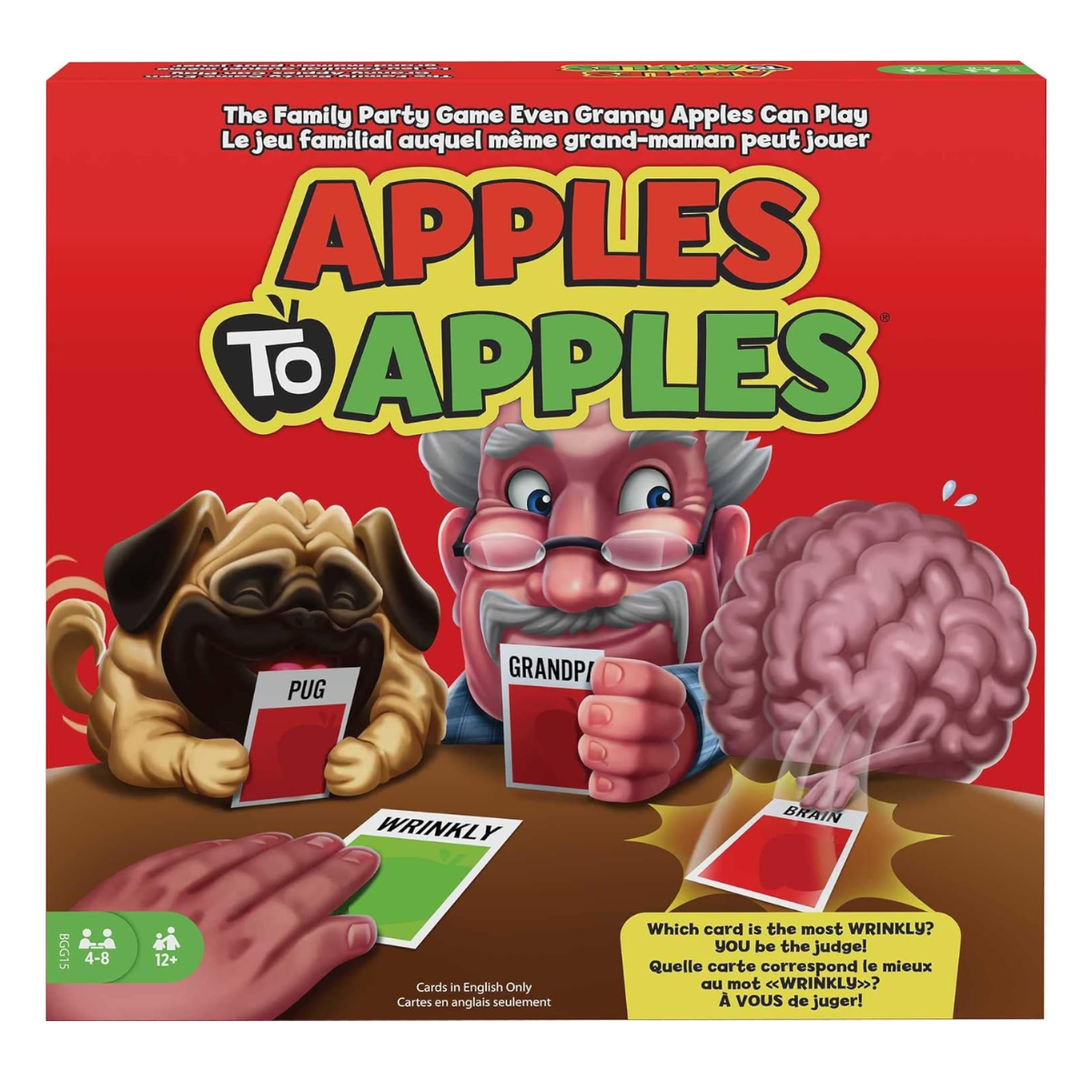
Apples to Apples — Party Box
The classic family-friendly version of “pair a response to a prompt,” designed for inclusive laughs and minimal cringe. One player judges; everyone else picks a card that fits (or hilariously doesn’t). For 2–20 players, set table teams so more voices craft the perfect play, and rotate the judge quickly to spread spotlight time. The humor lands across generations, which is why it still anchors office parties and holiday gatherings. To freshen it up, add a “pitch your pick” rule—five-second explanations allowed—so quieter guests get tiny, safe moments on mic. It’s comfort-food gaming that’s easy to teach, easy to tune, and easy to replay.