

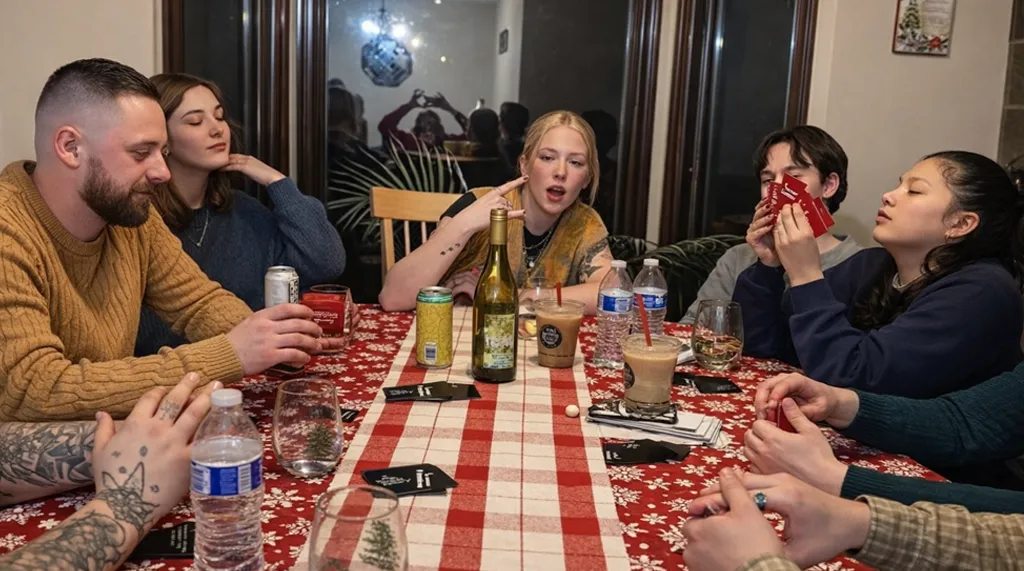
Game night should feel like a fun hangout with a side of cards—not a part-time job where you’re managing rules, snacks, and everyone’s attention span. If you’re landing here from an email, here’s the promise: by the time you’re done reading, you’ll know exactly what to prep (and what to skip) so your next game night runs itself.
The secret isn’t being “the perfect host.” It’s making a few smart choices upfront: pick a game that fits your people, set a vibe that keeps everyone relaxed, explain rules like a human (not a tutorial), and keep a backup option so the energy never dies. That’s it.
And because this is My Hero Cards, you’ll see game suggestions woven in naturally—so you can match the right deck to the right night without turning this into a giant shopping catalog. (If you do want to browse everything at once, the fastest shortcut is the My Hero Cards Game Collection hub.)
Printable Game Night Checklist (General)
Printable: Your one-page Game Night Checklist is available here. Print it and tape it to the fridge.
1) Pick the Right Game
This is where most “meh” game nights are born: the host picks a game they love… for a group that doesn’t play like that.
Instead, do a 10-second crowd check:
- Party people / loud table / everyone roasting everyone: go chaotic, fast, and replayable.
- Small group / chill vibe / more conversation than chaos: go more personal, more intentional.
- Couples night (or double date): go flirty + funny or meaningful + connective depending on the mood.
- Fandom-heavy group: pick a deck that’s basically an inside-joke machine.
Quick matchmaker (My Hero Cards edition)
If you want the “right game, right crowd” shortcuts, here are easy fits:
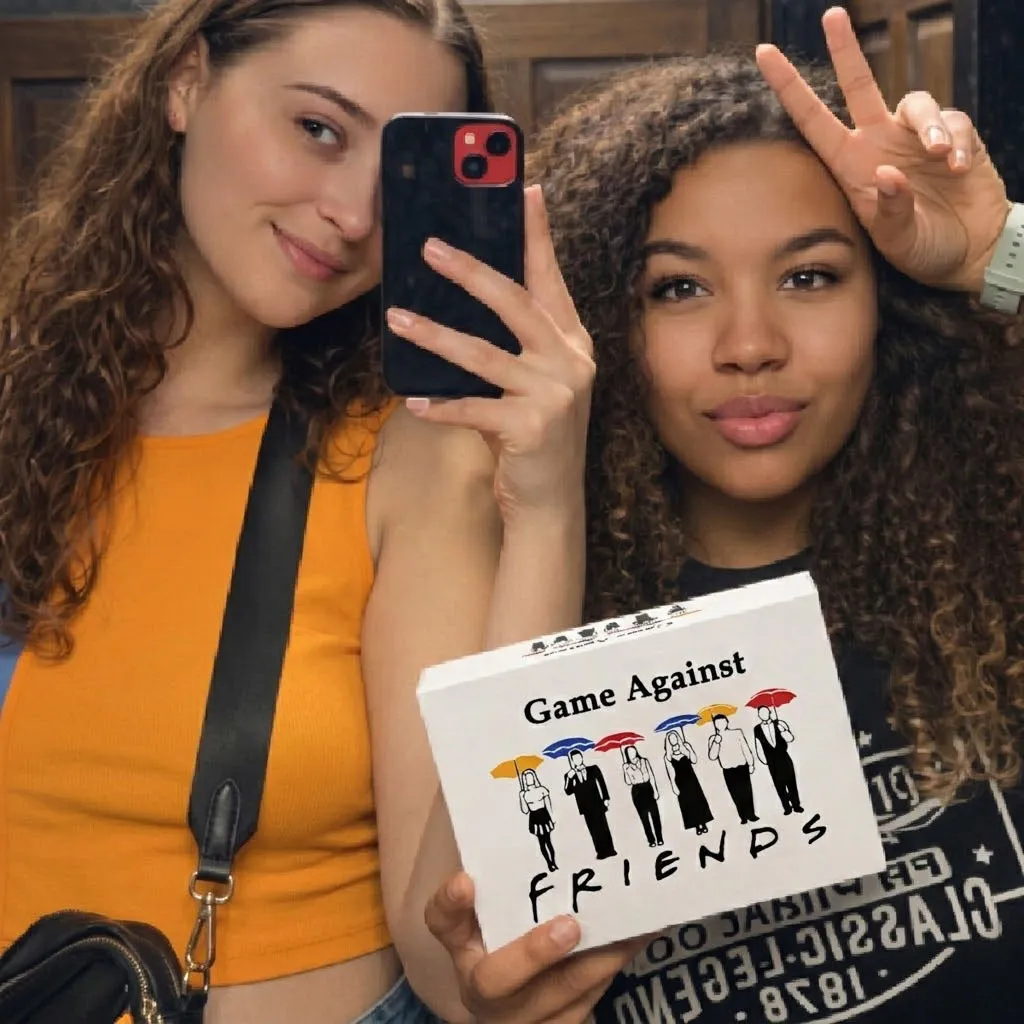
1. Cards Game Against FRIENDS (Limited Edition)
This one is pure sitcom-chaos for groups who love fast jokes and big reactions. You get a 350+ card set built around FRIENDS references, and the gameplay is dead simple: one person reads a question card, everyone else plays an answer card, and the reader picks the funniest combo.
It’s designed to keep rounds moving (think 5–15 minutes) and it’s easy to teach in about 2 minutes, so nobody gets stuck in rules land. Best for mixed groups where at least a few people are super fans—because the inside jokes hit harder.

2. Game Against Golden Girls (Limited Edition)
A nostalgia-fueled party deck that turns Dorothy/Rose/Blanche/Sophia energy into chaotic card combos. It’s the full 250+ card set, so you can run multiple nights without repeating the same beats too quickly.
Play is the classic “prompt + answer” flow: one player reads a question card, everyone else draws and submits an answer, and the funniest pairing wins. It’s quick to learn (2 minutes), plays well with 2–20 people, and rounds typically land around 10–15 minutes, which makes it easy to squeeze in “one more round” without noticing time disappear.
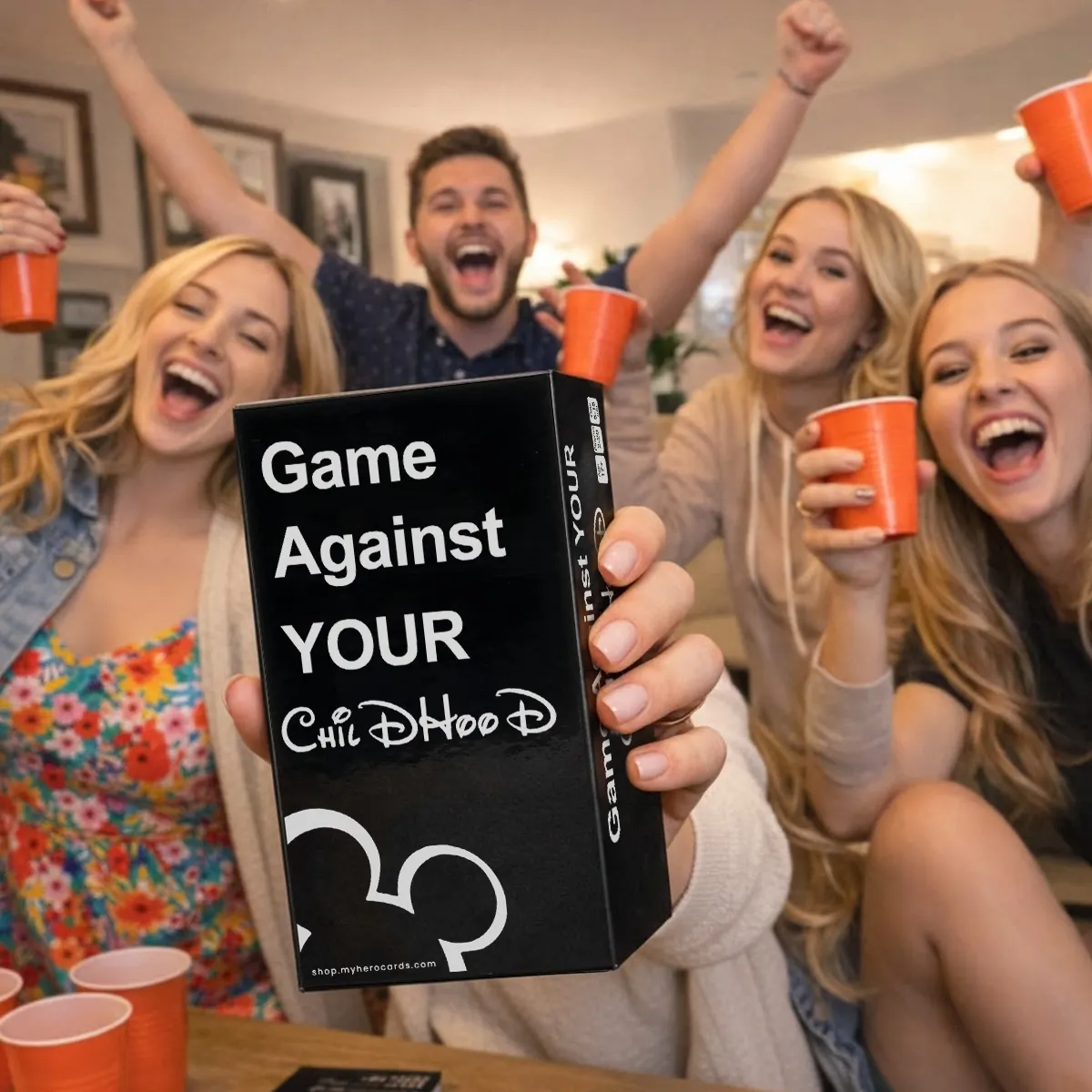
3. Game Against Your Childhood (Limited Edition)
If your group bonds over throwback references and “remember when…” moments, this is a monster deck built for nonstop replay. It’s advertised as 500+ cards, and the structure is super approachable: one player reads a question card, everyone else plays an answer card, then the reader picks the funniest combo.
It’s made to start fast (listed at 2 minutes to learn), scales from 2–20 players, and the short 5–15 minute rounds make it perfect for bigger groups where attention spans are… seasonal. It’s also a strong “starter game” because nobody has to be strategic—just funny.

4. Mom Against The World
This is the “parent humor” pick when you want something that feels like group therapy, but louder. It’s positioned as a party card game featuring 250+ cards, which makes it a great option for keeping the table fresh over multiple rounds and multiple nights.
The vibe works best for moms’ nights, grown-up family hangouts, and friend groups who love relatable chaos (sleep, snacks, schedules, and all the “why is this my life?” moments). It’s the kind of deck you can drop in as your main game or keep as a backup when you need the room to loosen up fast.
Fandom nights (everyone’s obsessed, nobody needs context)
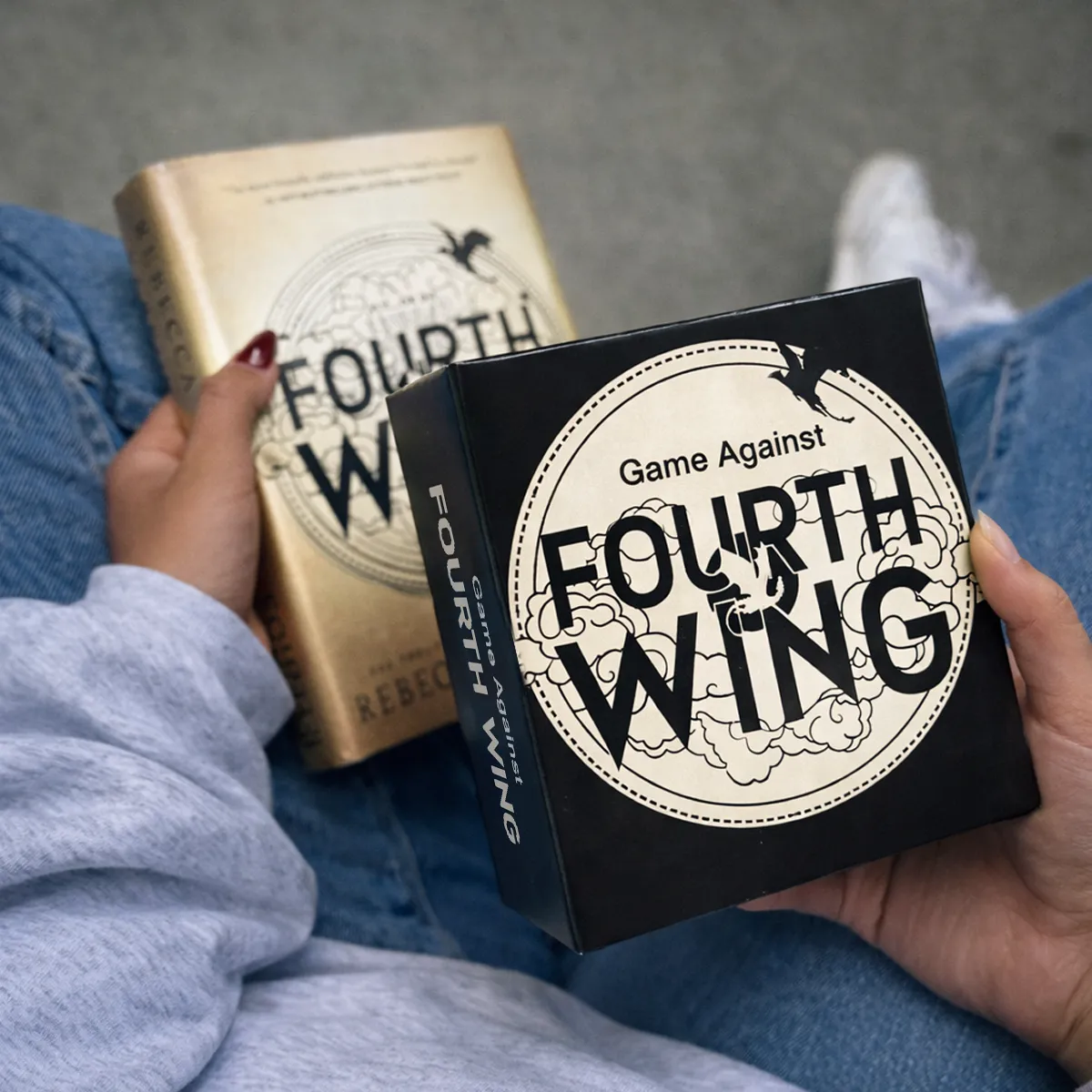
5. Game Against Fourth Wing (Limited Edition)
Built for fan groups who want their book club to immediately derail into laughter. This is the complete set with 250+ cards, designed to work as a standalone deck (but it can also mix with other decks if you’re stacking chaos).
The play pattern is simple and familiar: one player reads a question card, everyone else draws answer cards and plays their best match, then the reader picks the funniest combo. It’s listed as 2 minutes to learn, supports 2–20 players, and runs 15–30 minute rounds, so it works for both quick warmups and longer “we’re here all night” sessions.
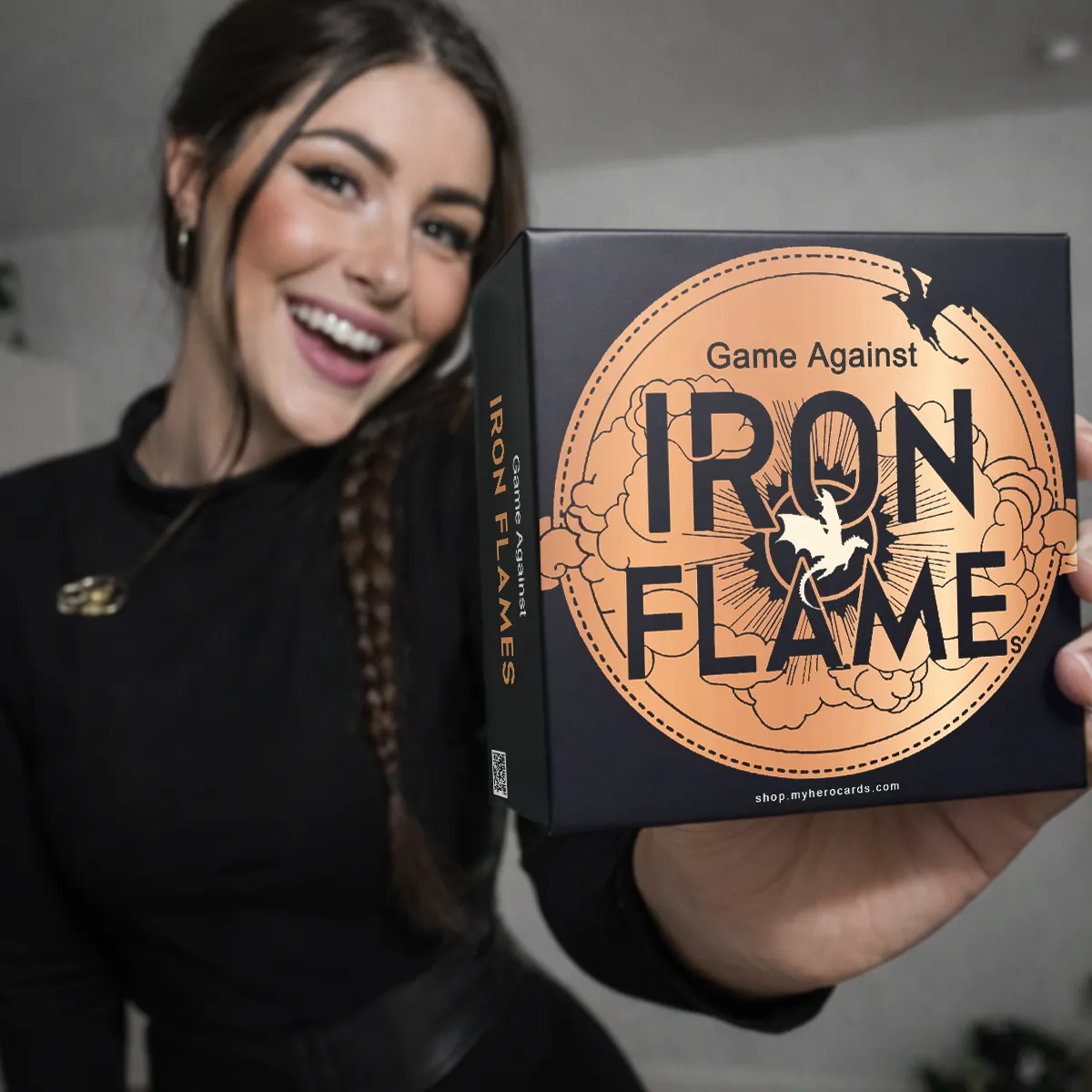
6. Game Against Iron Flames (Limited Edition)
Same fan-first energy, tuned for Iron Flame readers who want their game night to feel like inside jokes that got out of hand. It’s a 250+ card complete set and it’s built to be played on its own, with a format that stays easy: one prompt, everyone plays an answer, reader chooses the funniest pairing.
It’s also listed as 2 minutes to learn, plays with 2–20 people, and typically runs 15–30 minutes per round, which makes it a solid “main event” game for a fandom-heavy night. If you’re doing a “Fourth Wing + Iron Flame” hangout, this is an easy swap-in when the room wants fresh prompts.
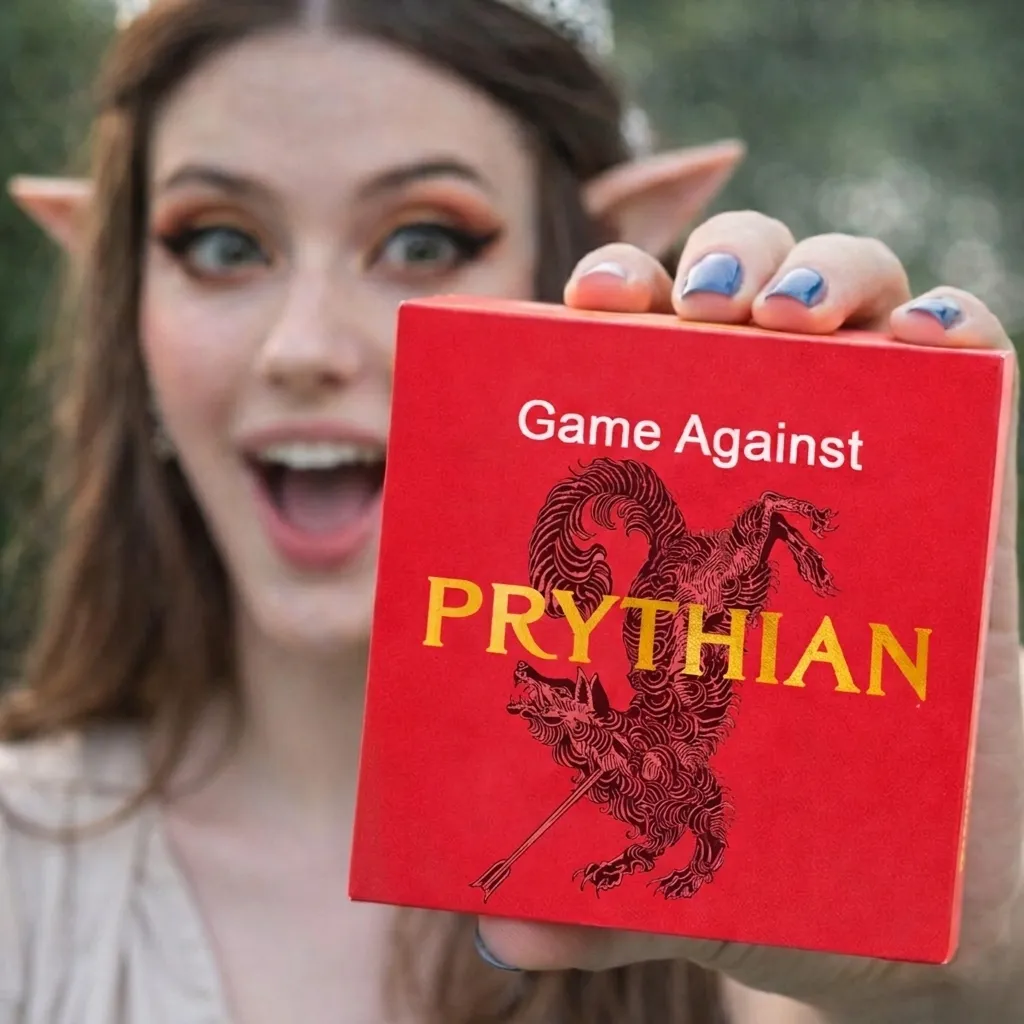
7. Game Against Prythian (Limited Edition)
For ACOTAR groups where the lore is basically a second language. You’re getting 250+ cards and the gameplay is instantly familiar: one player reads a question card, the rest of the table draws answer cards and plays the funniest match, and the reader crowns the winner.
It’s listed as 2 minutes to learn, works for 2–20 players, and rounds are typically 15–30 minutes, which makes it great for watch-party style nights or post-book debriefs where you want laughs without needing a “game person” to run everything. Best results come when most of the table knows the references—then it really sings.
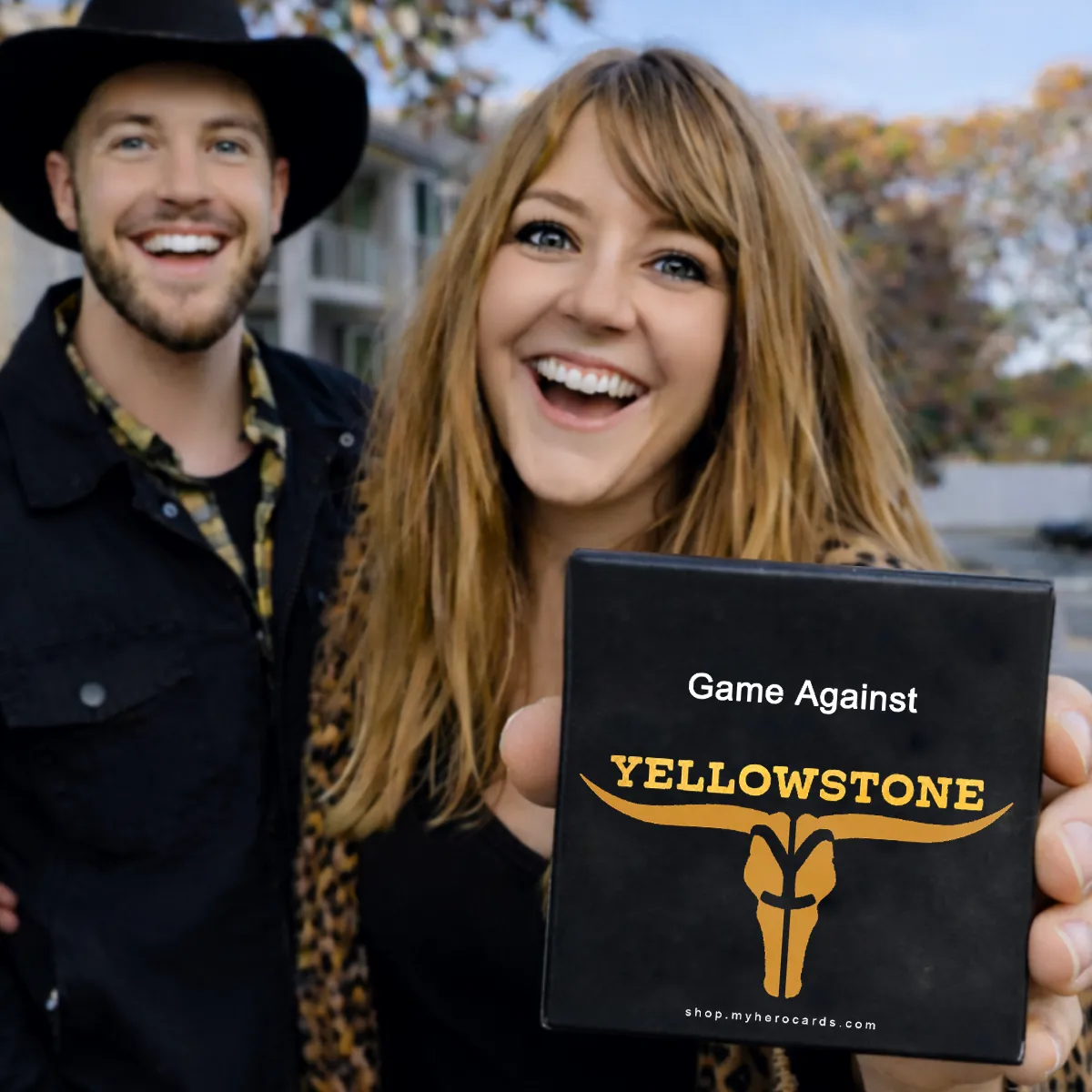
8. Game Against Yellowstone (Limited Edition)
A fan-deck that plays like a classic party card game but hits harder if your group loves the show’s characters and drama. It’s the complete set with 250+ cards, and it’s built to be standalone while still mixing nicely with other decks if you’re rotating games.
The format is easy to teach: one player reads a question card, everyone else plays an answer card, and the reader picks the funniest combo. It’s listed at 2 minutes to learn, scales from 2–20 players, and runs 15–30 minute rounds, which makes it an easy pick for watch parties, themed nights, or “we just need something fun now” gatherings.
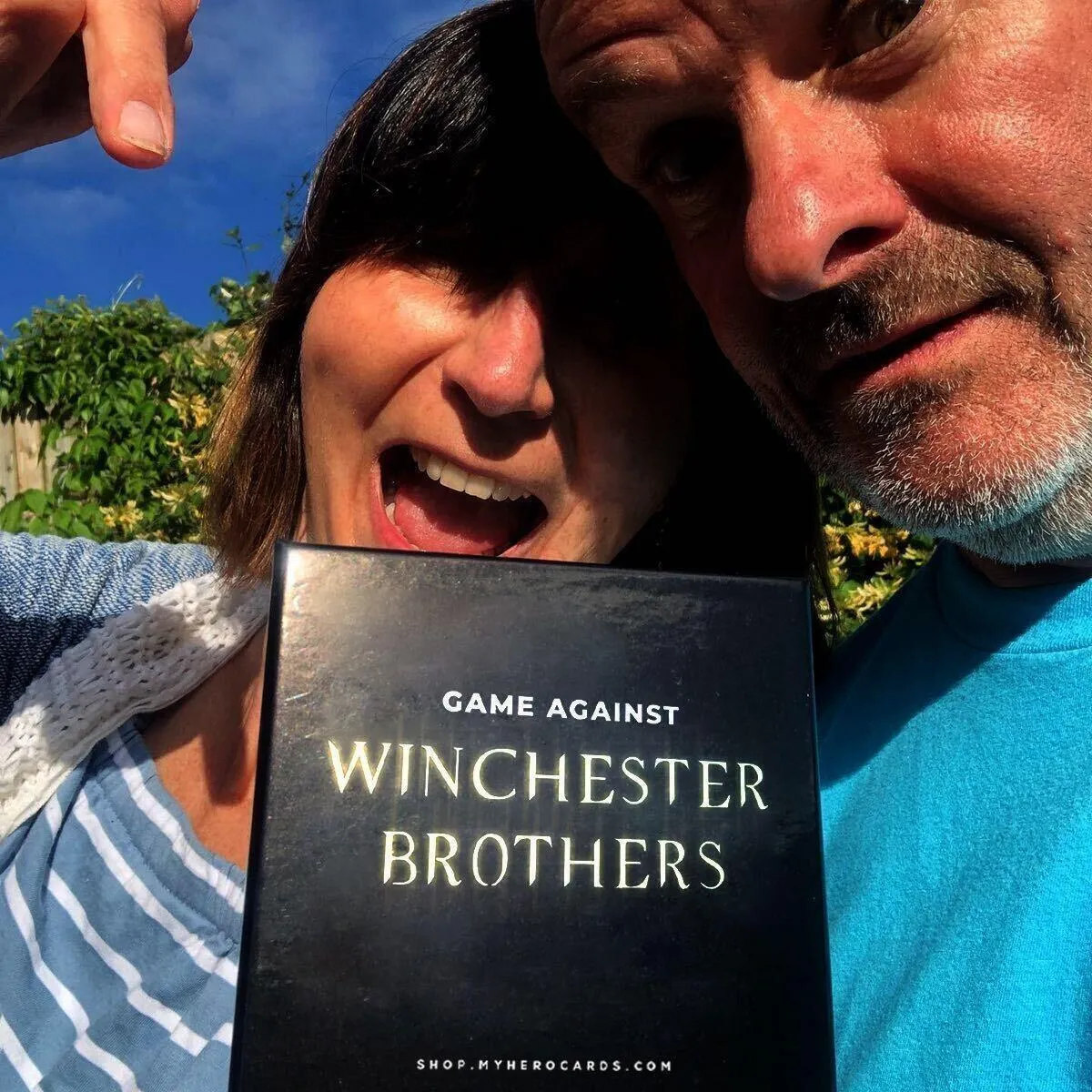
9. Game Against Winchester Brothers (Limited Edition)
Dark humor + supernatural references, designed for late-night energy when the group is ready to get a little unhinged. This is a 252-card full set, and it’s meant to be easy to run as a standalone game (or blend with other decks for extra variety).
The rules are classic and fast: one player reads a question card, everyone else draws answer cards and plays the best match, then the reader picks the funniest combination. It’s listed as 2 minutes to learn, supports 2–20 players, and keeps things moving with 10–15 minute rounds, so it’s great when you want laughs without a long setup.
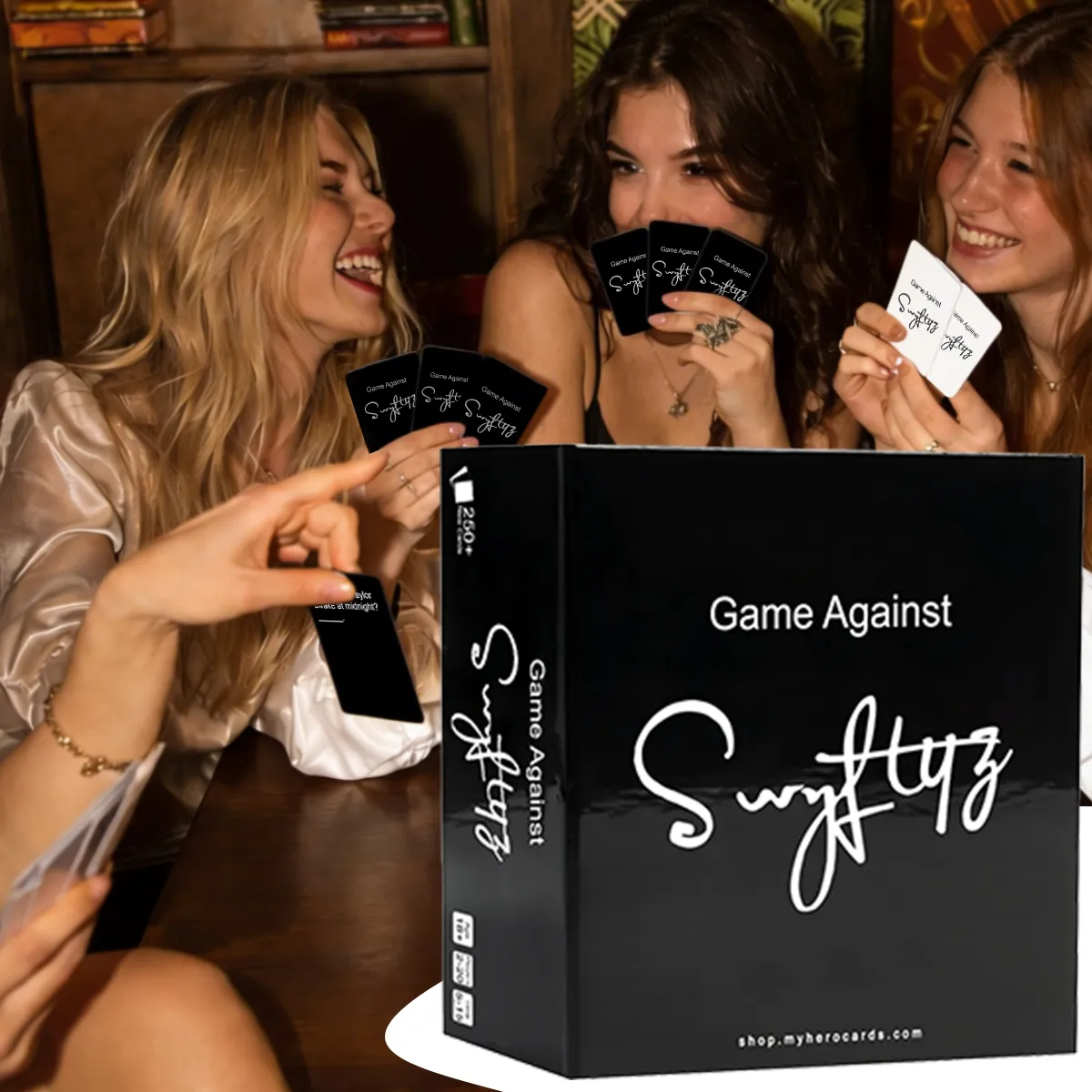
10. Game Against Swyftyz (Limited Edition)
This is for Swiftie meetups, pre-concert hangs, bachelorette energy, or any group that communicates in references. The deck is packed with 250+ cards and plays in quick, punchy rounds: one player reads a question card, everyone else plays an answer card, and the reader chooses the funniest combo.
It’s listed as 2 minutes to learn, works for 2–10 players, and rounds tend to be 5–15 minutes, so it’s easy to keep momentum high and swap players in and out. Even better: because the rounds are short, it’s a great backup game when the room needs a reset.
Couples + connection (date night, double date, long-distance)
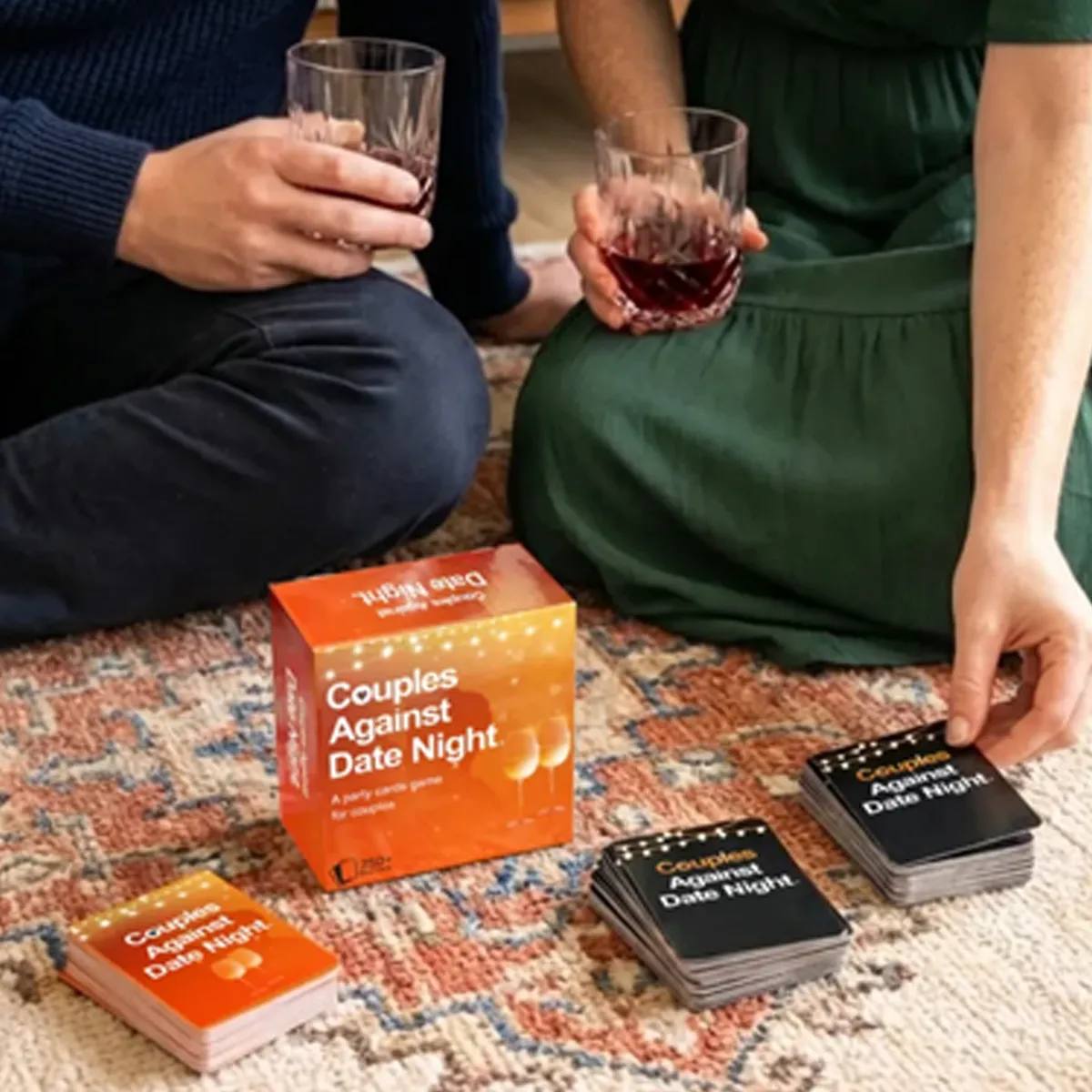
11. Couples Against Date Night
A couples card game built to turn “Netflix and scroll” into an actual moment. The gameplay is simple—one person reads a question card and the other responds with an answer card—so you’re playing in minutes, not learning for an hour.
It’s listed as 2 minutes to learn, works for 2+ players, is geared for ages 17+, and keeps things light with 5–15 minute rounds, making it easy to play a few rounds before dinner or go longer if the vibe is hitting. It’s best when you want playful flirting, inside jokes, and easy laughter without needing a big group.

12. What We Have Built Together (Couples Edition)
This is the “slow down and actually talk” pick, built around conversation prompts that help couples reconnect without it feeling like homework. It’s organized into 3 categories designed to encourage real communication, spark intimacy, and deepen connection—so you’re not randomly pulling questions with no direction, you’re moving through a structured vibe.
It’s easy to play because there’s no scoring system to manage: pick a card, ask, answer, and follow the conversation where it goes. Best for anniversaries, quiet nights in, or double dates where you want a meaningful tone that still feels fun and natural.
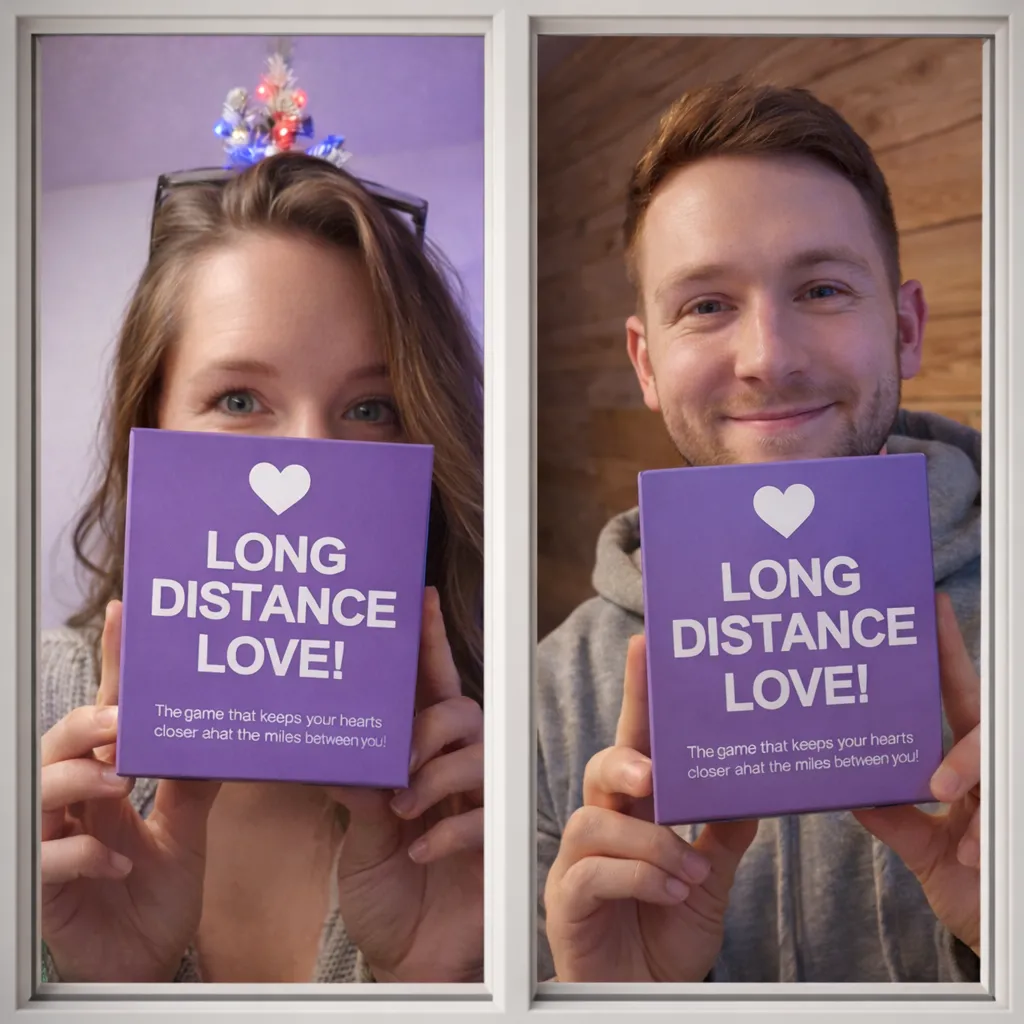
13. Long Distance Love
Purpose-built for couples who aren’t in the same place, this one turns distance into an actual connection ritual. Inside, you get 120 question cards across 3 categories (Stay Close, Our Future, Keep the Spark), plus an instruction manual, a redeemable $10 gift voucher card, and a thank you card—so it’s ready to use right out of the box.
It’s easy to play over video calls, phone calls, or even as a “one card a day” routine because the prompts do the heavy lifting. If you want a game night that feels intimate instead of chaotic, this is a clean win.
Faith-friendly group nights
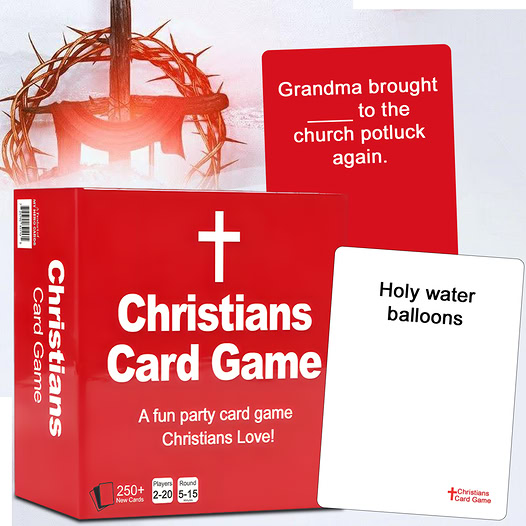
14. Christians Card Game
A party-friendly deck designed for church groups, Bible studies, youth group hangouts, and game nights where you want laughs that still feel appropriate for the room. What’s included is super clear: 198 answer cards, 69 question cards, an instruction manual, a redeemable $10 gift voucher, a thank you card, and a premium membership perk (20% off future cards + community access).
The way it plays fits the classic prompt-and-answer flow, so even first-timers can jump in quickly—no complicated strategy, just pick the funniest match and keep rounds moving. Great when your group wants “clean fun” that still feels current.
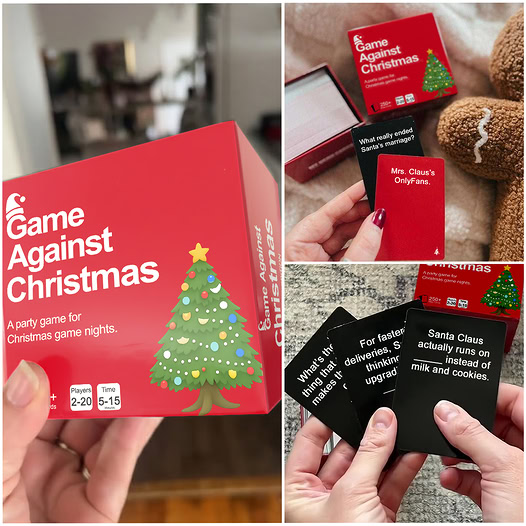
15. Game Against Christmas (Limited Edition)
The holiday chaos deck built for ugly sweater parties, family game nights (the fun side of the family), Friendsmas gatherings, and end-of-year hangouts that need instant energy. This is a full standalone party set packed with 250+ cards, built around the classic prompt-and-answer format: one player reads a question card, everyone else submits an answer card, and the reader picks the funniest (or most unhinged) combo.
It’s quick to teach—about 2 minutes—scales easily for medium to large groups, and rounds typically run 10–15 minutes, making it perfect for “just one more round” momentum. Best for groups who love seasonal humor, chaotic laughs, and turning Christmas references into inside jokes that last all year.
2) Set the Vibe
A good vibe does half the hosting for you. You’re trying to create a setup where people can grab food, understand what’s happening, and feel comfortable being a little ridiculous.
The non-negotiables
- Lighting: brighter than a bar, softer than an office. If people can’t read cards easily, the fun dies fast.
- Music: low enough that nobody has to yell. Pick a playlist you won’t obsess over adjusting.
- Seating: everyone should be able to see the “reader” without twisting like a pretzel.
- Snacks within reach: the game flows better when you’re not pausing every 3 minutes for a snack run.
The “don’t derail the cards” snack rule
Choose snacks that don’t destroy hands/cards:
- Less: oily chips, powdered snacks, saucy wings
- More: pretzels, candy, wrapped minis, napkins everywhere, one “messy food zone” away from the table
Tiny host trick that feels magical
Put the cards + a pen + a small trash bowl on the table before anyone arrives. It signals “we’re doing this,” and people naturally gather.
3) Explain the Rules (Quickly)
Nobody wants a lecture. The goal is momentum.
Use this 30-second script (steal it word-for-word):
- “One person reads a prompt.”
- “Everyone else picks an answer card.”
- “We reveal, laugh, and the reader picks the best one.”
- “Winner keeps the prompt card. Next reader rotates.”
For Couples + Connection games, use the following rules.
Use this quick script:
- “Pick a card.”
- “Read the question out loud.”
- “Both people answer honestly.”
- “Follow the conversation where it goes.”
That’s it. That’s enough to start. You can correct details as you go.
Keep it fun (and avoid awkward moments)
Do a one-round “practice throwaway.” Everyone relaxes instantly because the first round doesn’t count.
- Set a quick boundary if needed: “If a card feels too much, toss it—no explanations required.”
- Keep rounds moving: if someone takes forever, give them a playful countdown: “5…4…3…”
4) Have a Backup Plan
Even the best games can flop for the wrong group on the wrong night. That’s not a failure—it’s normal.
Your fix is simple: have 2–3 options ready and switch before people get bored.
Backup plan ideas that actually work:
If the table is too quiet: switch to a louder party deck (fandom decks are great for this because they hand people instant “inside jokes”).
If the humor is mismatched: pivot to something more connection-based (couples/conversation decks reset the tone fast).
If the group is huge: choose a deck that scales cleanly and doesn’t require complicated turns (big-deck options help because you won’t repeat cards quickly).
The best time to switch is when someone says:
“Wait, what are we doing?”
“This is kinda weird…”
“How many rounds is this?”
That’s your cue. Swap games, change readers, or take a snack break and restart with a new deck.
FAQs
How long should a game night be?
Plan for 90 minutes to 3 hours, depending on the group. The easiest win is ending while the energy is still high, not after everyone’s cooked.
How many games should I have ready?
Bring 2–3 total: your main pick + at least one backup with a different vibe (party vs. couples vs. conversation).
What if someone doesn’t “get” the game?
Give them an easy on-ramp: pair them with a friend for one round, do a practice round, and keep the rules explanation short. Confidence shows up after the first laugh.
What’s the #1 mistake hosts make?
Over-explaining and over-managing. Set the table, start fast, and let the game do the work.